Leo Szilard Quotes
Byrnes... was concerned about Russia's postwar behavior. Russian troops had moved into Hungary and Rumania, and Byrnes thought it would be very difficult to persuade Russia to withdraw her troops from these countries, that Russia might be more manageable if impressed by American military might, and that a demonstration of the bomb might impress Russia.
Szilard, Leo. Leo Szilard: His Version of the Facts: Selected Recollections and Correspondence. Edited by Spencer R. Weart and Gertrud Weiss Szilard, MIT Press, 1978, p. 184.


The issue of unilateral or multilateral foreign policy efforts faced America after WWII.
Kennan was one of the few people who saw the possibility of Soviet rule of Eastern Europe crumbling as it did almost 50 years later. Most Americans thought that the Soviet Union was so militarily entrenched that they would never be ousted short of war.

The British suspected that the Turks of Anatolia were complicit with Bolshevism


This was an amazing prediction for the time. Most Europeans were not sure that the United States would even survive, and Russia was looked upon as the most backward nation in Europe. By the middle of the 20th century—over 100 years after Tocqueville wrote this—The United States and Russia were the two superpowers of the world.

Russia then had designs on Afghani Territory. About a century later, Russia Invaded Afghanistan and tried to impose a communist government. It failed and the Afghans drove out the Russians.


McNamara stated that the Cuban Missile Crisis was more politically required than defense required. The Russians had nuclear missiles at the time that could reach the United States and didn’t really need missiles in Cuba to threaten America. Public opinion and the Republican Political doctrine persuaded President Kennedy that independent of safety and military factors, nuclear missiles in Cuba was a major political problem. See his comment to the President and the Other Officials dealing with the crises—{631968}.


Ironically, at the time she wrote this column, Mrs. Roosevelt was being accused of being a communist by some Southerners who associated her strong views against racism and segregation. Some in the North thought she was a communist because of her active role in the New Deal, Yet here she was, willing to use military force to prevent Soviet expansion.


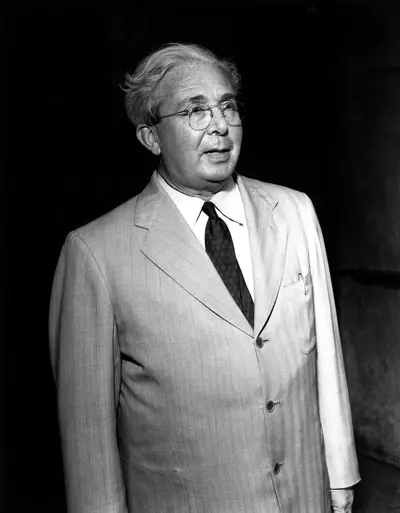
Leo Szilard was a Hungarian-American physicist and inventor. He conceived the nuclear chain reaction in 1933, patented the idea of a nuclear fission reactor in 1934, and in late 1939 wrote the letter for Albert Einstein's signature that resulted in the Manhattan Project that built the atomic bomb. According to György Marx he was one of the Hungarian scientists known as The Martians.
