Edward Gibbon Quotes
But this inestimable privilege was soon violated: with the knowledge of truth the emperor imbibed the maxims of persecution; and the sects which dissented from the catholic church were afflicted and oppressed by the triumph of Christianity. Constantine easily believed that the heretics, who presumed to dispute his opinions or to oppose his commands, were guilty of the most absurd and criminal obstinacy; and that a seasonable application of moderate severities might save those unhappy men from the danger of an everlasting condemnation.
Gibbon, Edward. The History of the Decline and Fall of the Roman Empire. Vol. 2, W. Strahan and T. Cadell, 1781, p. 231.


In most countries those who identify with the economic views of Mises also tend to be strong supporters of orthodox religion—usually Christianity. American conservative Republicans are typical. However they rarely are aware of views and quotations of their intellectual guru that are evidenced by this quote. See {632408} for another quotation that distressed many European conservative devotees of Mises.

Odo of Chatillon-Sur-Marne. This is an amazingly distressing quotation for most moderns. Here we have the Pope preaching genocide and ethnic cleansing. This was one of the main triggers of the bloody Crusades and is not forgotten by Muslims in the Middle East Today. As Islam has not changed a great deal in 1000 years, most Muslims assume that the same is true of Christianity and especially the popes and the Roman Catholic Church. This is one of the reasons that the Islamic world reacts so strongly when a pope makes any statement negatve about Muslims and Islam.


In the midst of the Argentine Dirty War where the right wing government was murdering and torturing their political enemies of the left, most of the Catholic Church Priests and other Church Authorities had sided with the government and morally overlooked their atrocities and crimes against humanity. Others were fearful as Bishop Enrique Angelelli had been murdered by the military death squads in 1976. Bishop Hesayne was one of the few members of the Church hierarchy who criticized church officials for their silence.

In September of 2006 Pope Benedict XVI, quoted this statement in a lecture to theological students. There was much distress and protest among Muslim leaders.

Although they were a Christian sect, there was not a lot of tolerance then by the Catholic Church especially for Christians who theologically deviated slightly from official doctrine. Ironically, the Muslims who conquered Egypt and Syria were much more tolerant of the Syrian Christians than their fellow Christians were. See {634767} for his view of Islamic tolerance.

This was the beginning of the inquisition.


This quotation—presented in its entirety because it is so unbelievable—illustrates one of the uglier and nasty aspects of Colonial America. Most of us associate early American colonists with persecuted minorities escaping the intolerance of Europe, but so much of the concept of tolerance then concentrated on the rights of a religious community but provided little if any obligation to then be tolerant of OTHER minorities in their colonies and communities. In this case, Massachusetts Christians did not perceive Quakers as either Christians or another sect to be tolerated. They not only wanted the Quakers stopped from coming to other parts of America, but actually attempted to interdict the Quaker immigrant ship, capture the Quakers, and sell them into slavery in the Caribbean. What makes the incident even more offensive is that the ethics of this was never questioned and was even justified as Christian acts and even duty. The Welcome evaded the Porpoise The founding fathers knew about these incidents and the religious discrimination that was rampant in many Colonial communities as bad as England and Europe. Hence, the separation of Church and State concepts were not just protections against the way of the old world, but dealt with a clear and present danger that Colonial history had demonstrated.

The King, a religious exremist fanatic, was a great supporter of the Inquisition whose excesses were horrible during his reign.

The implication of a double moral standard for adherents of the faith and for others has been characteristics of many religions.

Toleration is a relative term. The Muslim Moors made Christians (and Jews) pay a special tax. At times they were forced to wear special clothing so that they could be readily identified. And they could not build churches larger or taller than the smallest mosque in the community. At times, their occupations were restricted but at other times Christians and Jews were appointed to the highest positions like Vizier. The Inquisition, in contrast, forced all Muslims (and Jews) to leave the country without any of their property or money or be tortured and killed—usually by burning at the stake unless of course that they converted to Christianity.
Before the Protestant Reformation of Martin Luther, there had been a schism of the Catholic Church into the Western Roman Empire—the Latins, headquartered in Rome; and the Orthodox Church—the Greeks, headquartered in Constantinople (Byzantium). One of the main issues of the schism was the Papacy itself. As this quotation shows, Luther was by no means the first to attack the Papacy. Saint Mark’s quotation here was more than 50 years before Luther was born.
The French were governing Syria under a League of Nations mandate which was about to expire in 1936. The Alawites and other minorities feared for their future once the Sunni Muslims took over the government. The petition asked the French to continue to exercise their authority. The Alawite solution was to ruthlessly seize control of the Syrian government with the support of the Christians, Jews and other minorities. Al-Assad’s son and then his grandson took over as the President (de facto dictator) of Syria. In the 2012 Syrian revolution against the Alawites, al-Assad (the grandson) fought the insurgency so brutally that many nations ended up supporting and aiding the rebels. However, the fear of what would happen if the Alawites were again relegated to minority status, drove the Alawite brutality.


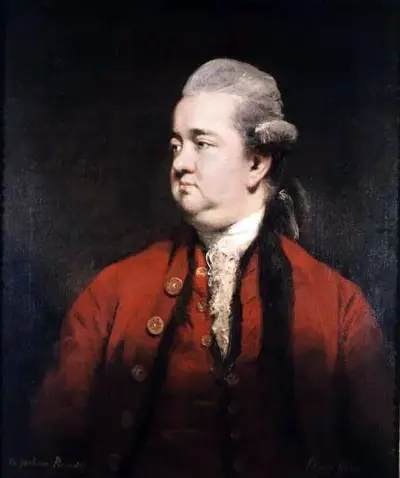
Edward Gibbon FRS was an English historian, writer and Member of Parliament. His most important work, The History of the Decline and Fall of the Roman Empire, was published in six volumes between 1776 and 1788 and is known for the quality and irony of its prose, its use of primary sources, and its polemical criticism of organised religion.
