Aristotle Quotes
But since there is but one aim for the entire state, it follows that education must be one and the same for all, and that the responsibility for it must be a public one, not the private affair which it now is, each man looking after his own children and teaching them privately whatever private curriculum he thinks they ought to study.
Aristotle. The Politics. Translated by T. A. Sinclair, Penguin Books, 1962, p. 300.


This is one of the earliest statements in favor of government involvement in education. In a sense, it is this quotation that is fundamental to the concepts of public education and to government regulation of education.

1st Earl of Beaconsfield. This is one of the favorite quotations of those who oppose a strong federal role in education.


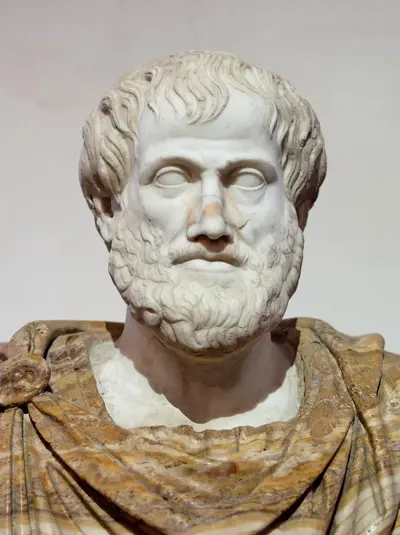
Aristotle (/ærɪˈstɒtəl/; Greek: Ἀριστοτέλης Aristotélēs, pronounced [aristotélɛːs]; 384–322 BC) was a Greek philosopher and polymath during the Classical period in Ancient Greece. Taught by Plato, he was the founder of the Lyceum, the Peripatetic school of philosophy, and the Aristotelian tradition. His writings cover many subjects including physics, biology, zoology, metaphysics, logic, ethics, aesthetics, poetry, theatre, music, rhetoric, psychology, linguistics, economics, politics, meteorology, geology and government. Aristotle provided a complex synthesis of the various philosophies existing prior to him. It was above all from his teachings that the West inherited its intellectual lexicon, as well as problems and methods of inquiry. As a result, his philosophy has exerted a unique influence on almost every form of knowledge in the West and it continues to be a subject of contemporary philosophical discussion.
