Victor Hugo Quotes
But secondly you say 'society must exact vengeance, and society must punish'. Wrong on both counts. Vengeance comes from the individual and punishment from God.
Hugo, Victor. "Preface." The Last Day of a Condemned. Translated by Sir P. Hesketh Fleetwood, Smith, Elder and Co., 1840.


Our legal system tries to take the personal vengeance out of the law enforcement equation unlike for example Saudi Arabia where relatives get to personally behead the convicted murderer of one of their family. Rosenbaum and a few others claim that our system I not emotionjally and naturally satisfying.

It turned out that it was that particular forester had approved the “use” of the national forest. FDR transferred much land from the Forest Service which was cozy with large economic corporate interests to the Park Service which then was not. Later, both would be or not depending on the leadership at the time.


This is an excellent example of a theme that has been used since biblical times to justify massacres by military men. Namely that if the first town that you conquer is treated terribly enough, the word will get around and the next town the people will pressure their military to surrender to avoid the same fate. Therefore, they argue, as Ludlow does, that the massacre will reduce future violence. That perverse ethical logic has lasted for a long time. However, that was not the only motive here—vengeance was a major factor. This is another good example of the fact that many of the worst moral atrocities of men were perpetrated and led by men who thought that there were being moral and consonant with God’s will. See {639301} for Oliver Cromwell’s description of the massacre.


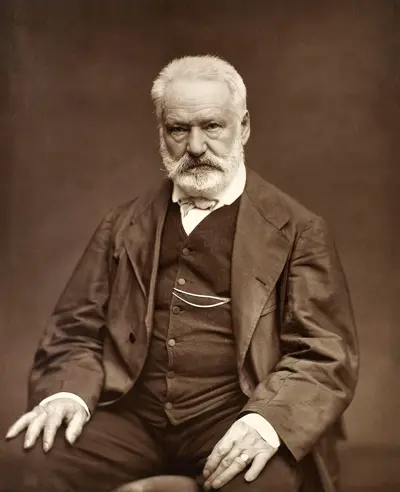
Victor-Marie Hugo was a French poet, novelist, and dramatist of the Romantic movement. During a literary career that spanned more than sixty years, he wrote abundantly in an exceptional variety of genres: lyrics, satires, epics, philosophical poems, epigrams, novels, history, critical essays, political speeches, funeral orations, diaries, letters public and private, as well as dramas in verse and prose.
