Charles Evans Hughes Quotes
But it is recognized that punishment for the abuse of the liberty accorded to the press is essential to the protection of the public, and that the common law rules that subject the libeler to responsibility for the public offense, as well as for the private injury, are not abolished by the protection extended in our constitutions. The law of criminal libel rests upon that secure foundation. There is also the conceded authority of courts to punish for contempt when publications directly tend to prevent the proper discharge of judicial functions.
Hughes, Charles Evans. Near v. Minnesota, 283 U.S. 697 (1931), p. 715.


In September of 2005 a Danish Newspaper published some political cartoons showing the hypocrisy of some Muslims who use Islam to justify murder of innocents and terrorism. Months later, in January of 2006 many in the Middle East protested vehemently and Muslim fatal riots broke out because the Prophet Muhammad's visage was depicted against Islamic tradition. Many Muslim nations started a boycott against Denmark. Many Muslim leaders claimed that insulting religion was an “abuse” of freedom of speech including those from nations which regularly publish material that is virulent against Christians and Jews.


Jefferson was visited by a famous German scientist who read a newspaper in the President's study which viciously attacked Jefferson. The scientist asked why this was allowed in America:

Originally it was published in Boston under the name “A Columbian Patriot.” This was written before the Bill of Rights had been added. Criticism like this led to their addition by Congress in order to obtain ratification.

The evils of the time were even worse than in modern times. Most newspapers, journals, and periodicals were in 1835 actually owned and operated by political parties or people totally identified with political parties. In modern times, there are publications and blogs which are controlled by political forces, but most are not.

There has been a constant conflict between the government and the press regarding the right of a journalist to refuse to disclose his/her sources for a story or to reveal his/her notes or outtakes. Reporters would sometimes be subpoenaed and if they refused to testify or disclose the subpoenaed information, they could be held in contempt of court and fined, jailed or both. However, one of the major reasons reporters have been able to get information on the malfeasance and incompetence of government is that leakers and whistleblowers have been willing to provide information to the press is that they are confident that the press will not disclose the source. The courts have ruled that journalists have no special rights regarding subpoenas, so the outcome of the conflict depends on the political decision of the administration. For the 2nd Obama administration, this has his announcement that the Justice Department would not jail reporters who ignored subpoenas. However many proponents of a free press, do not want to depend on the decision of the Attorney General in office and want Congress to pass a Shield Law for journalists.

This is one of the Supreme Court opinions that was written so broadly that it clearly covered the Internet Blogs, Social Media, and other forms.


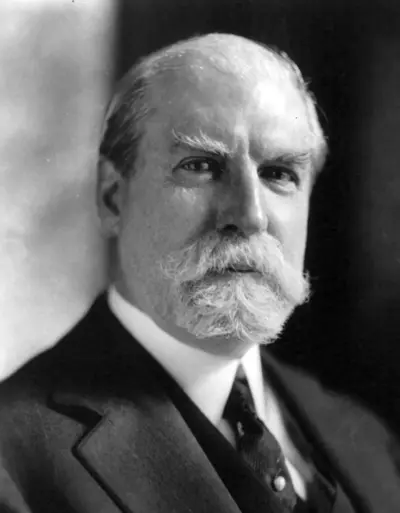
Charles Evans Hughes Sr. was an American statesman and politician who served as the 11th Chief Justice of the United States from 1930 to 1941. A member of the Republican Party, he was also the 36th Governor of New York, the Republican nominee in the 1916 presidential election, and the 44th United States Secretary of State.
