George Washington Quotes
But if the laws are to be so trampled upon with impunity, and a minority is to dictate to the majority, there is an end put at one stroke to republican government, and nothing but anarchy and confusion is to be expected thereafter.
Washington, George. "From George Washington to Charles Mynn Thruston, 10 August 1794." The Papers of George Washington, Presidential Series, edited by David R. Hoth and Carol S. Ebel, vol. 16, University of Virginia Press, 2011, pp. 544-546.


those engaging in civil disobedience This was written in Scotland before Witherspoon emigrated to America. A major issue of political and religious debate at the time in Scotland was civil disobedience. “Reform” religious advocates argued for the moral propriety of civil disobedience where the protester’s conscience felt that the laws were immoral and unjust. The were referred to as “Moderates.” Witherspoon, early in his career, was one of the conservatives who argued then, against the Moderates, that civil disobedience should be punished very severely. The conservative rhetoric at the time sarcastically referred to protestors as having “tender consciences.” The issue was contentious then, later in America, and is so even today.

The Irish had been concentrating so long on fighting for independence that when they got it, they were not prepared to operate a government and different jurisdictions scrambled for power, most not wanting the control government to have much if any.


There were anti-Vietnam war protests going on throughout the country that year. In many of them, especially at universities, protesters took over buildings, and shut down operations. Most Republicans and many Democrats wanted the protests to end, mostly because they feared the spread of the anti-Vietnam war sentiment would catch on and become a position held by most Americans (which it did just as they feared,) They were restrained in what they could do legally by the 1st Amendment. However, there was much breaking of minor laws in many of the demonstrations and that was the focus of the effort to suppress the demonstrations. But in the tradition of civil disobedience, it was the lawbreaking that tended to get the press attention and coverage, so the leaders of the anti-war movement advocated even more lawbreaking, hence Dirksen’s statement to the convention.


1st Earl Lloyd-George of Dwyfor. England had occupied Iraq, expecting to be welcomed by the natives, but like the George W. Bush ill-fated invasion almost a century afterward calls for withdrawal were met by the same rationale for maintaining the occupation. The English policy makers like the Bush administration were expecting a more welcoming reaction. See {585250}.


The World Trade Center and the Pentagon had been attacked by terrorists. The Vice President and other White House senior staff had followed procedure and gone to the protected bunker in the basement of the White House. Cheney was right in that he and the President instituted many illegal practices and taking power from Congress and the Courts. However, the things they elected to do to skirt if not defy the law, were not even good policy and Cheney and Bush became the “government of men” but the result was one of the worst and least popular administrations.


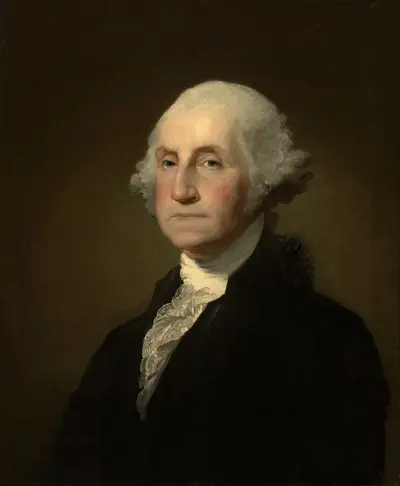
George Washington was the first President of the United States (1789-97), the Commander-in-Chief of the Continental Army during the American Revolutionary War, and one of the Founding Fathers of the United States. He presided over the convention that drafted the current United States Constitution and during his lifetime was called the "father of his country".
