Matthew Heineman Quotes
I was fascinated by what happens when government institutions fail and citizens take the law into their own hands.
Heineman, Matthew. "Director's Statement." Cartel Land Press Kit, The Orchard, 2015, p. 3.


1st Earl Lloyd-George of Dwyfor. England had occupied Iraq, expecting to be welcomed by the natives, but like the George W. Bush ill-fated invasion almost a century afterward calls for withdrawal were met by the same rationale for maintaining the occupation. The English policy makers like the Bush administration were expecting a more welcoming reaction. See {585250}.


The Irish had been concentrating so long on fighting for independence that when they got it, they were not prepared to operate a government and different jurisdictions scrambled for power, most not wanting the control government to have much if any.


Mashall was then Solicitor General of the United States.

There violence was extreme on both sides. However, the Fascist / Nationalists had a firm policy of violence and terrorism. The institutions of society had so broken down that vigilantism and revenge drove the Republicans to almost the level of atrocities as the Nationalists.

Spinoza was one of the most feared intellectuals in human history—feared that is by the established power structures. He is the only known person who was excommunicated by the Catholics, the Jews and the Muslims. He was the enemy of authority and advocated personal reason as the guide for men.

The article he wrote was the first serious plan and proposal to repeal Prohibition which was opposed by most people after the country had experienced the negative unintended consequents of making alcohol illegal. This was not unlike the second thoughts that many Americans began to develop regarding the War on Drugs at the end of the 20th century. Many felt the good that prohibition did (it improved the nation’s health) was not worth the bad that came with it (crime, corruption, police brutality, disrespect for the law.)


There were anti-Vietnam war protests going on throughout the country that year. In many of them, especially at universities, protesters took over buildings, and shut down operations. Most Republicans and many Democrats wanted the protests to end, mostly because they feared the spread of the anti-Vietnam war sentiment would catch on and become a position held by most Americans (which it did just as they feared,) They were restrained in what they could do legally by the 1st Amendment. However, there was much breaking of minor laws in many of the demonstrations and that was the focus of the effort to suppress the demonstrations. But in the tradition of civil disobedience, it was the lawbreaking that tended to get the press attention and coverage, so the leaders of the anti-war movement advocated even more lawbreaking, hence Dirksen’s statement to the convention.

Even in 1837 there were already riots over slavery and race in a number of American Cities. What is particularly interesting about this quotation is Lincoln bemoaning the violance and contrasting the then present with the past when law and order prevailed. Even our greatest President has had a romantic view of the past with respect to law and order, as many Americans have done in almost every American era.


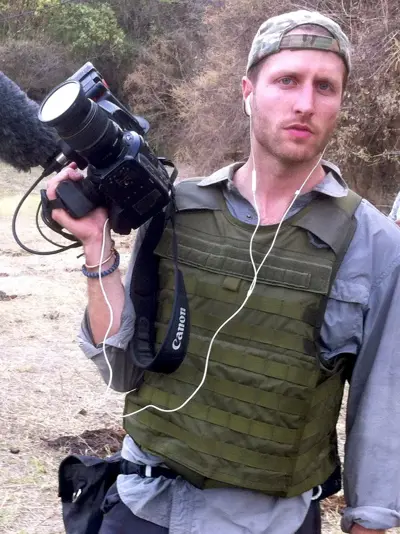
Matthew Heineman is an American filmmaker. The Sundance Film Festival called Heineman "one of the most talented and exciting documentary filmmakers working today", while Anne Thompson of Indiewire wrote that Heineman is a "respected and gifted filmmaker who combines gonzo fearlessness with empathetic sensitivity." He recently received a nomination for Outstanding Directorial Achievement of a First Time Feature Film Director from the Directors Guild of America for his narrative debut A Private War, making Heineman and Martin Scorsese the only filmmakers ever nominated for both narrative and documentary DGA Awards.
