John F. Kennedy Quotes
But colonialism in its harshest forms is not only the exploitation of new nations by old, of dark skins by light, or the subjugation of the poor by the rich. My Nation was once a colony,
and we know what colonialism means; the exploitation and subjugation of the weak by the powerful, of the many by the few, of the governed who have given no consent to be governed, whatever
their continent, their class, their color.
Kennedy, John F. "Address to the United Nations General Assembly, September 25, 1961." Public Papers of the Presidents of the United States: John F. Kennedy, 1961, U.S. Government Printing Office, 1962, p. 620.


The Daneish had conquered Northern England. The entire history—manuscript shown in the graphic—was written in rhymed couplets.
When the British first colonized South Africa, the area they used was not inhabited or very sparcely so. However, some Black tribes (including the Zulus) were moving from the north and themselves were colonizing or annexing the sparcely populated areas to their kingdom. The British were most interested in Trading so did not have large land asperations. The Dutch white Boer Africanners, in contrast, wanted to farm the lands and use the range for their cattle. They wanted the land. The English policy was that there would be friendly relations with the Black tribes surrounding their Cape Colony and no one should take their land. However the Boers started attacking the Black areas and seizing their farms and villages. At first, the English assumed that the Blacks would easily be able to ward off the invasion as the Afrikanners had no professional troops like the British. However, the neighboring native tribes were not very warlike or good fighters. They were being overrun by the Zulus coming from the North and the Boers from the South. The British Government had a real problem in that they would have to have British soldiers fight the white Afrikanners if they wanted to stop the illegal white invasions. This was the root of the Boer War where the British would be fully at war with the Africanners.

Burke argued for England giving America much more freedom and self determination.


This was in the first article of their Constitution upon gaining their independence. With a long tradition of Dutch colonialism and a particularly brutal Japanese colonization during WWII, the Indonesians were most preoccupied with this issue.


Referring to the Arawak natives he found when he landed in the "new world—San Salvador:"


unions and federations of two countries

The highway was planned to go through a poor neighborhood which had a high percentage of Black residents—all of whom would have to find other housing and move to make room for the highway. If the government plans a highway through a wealthy area, the cost to condemn and pay for the land will be much greater than if a poor neighborhood is acquired. For urban highways, the poor almost always bear a disproportionate share of the inconvenience while the major benefit inures to the wealthy and middle class. Abbot had been a labor organizer and a professional artist before he entered politics. The graphic is of his famous poster which by itself stopped the plans to build the highway very quickly.
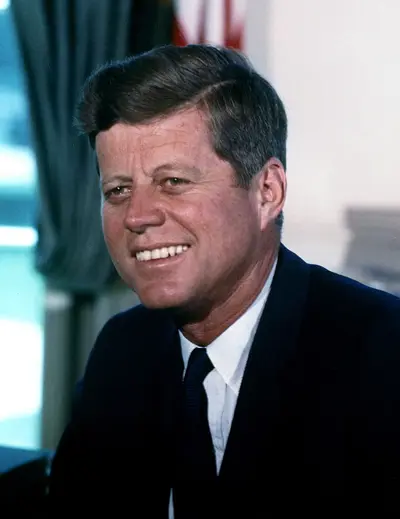
John Fitzgerald Kennedy, often referred to by his initials JFK, was an American politician who served as the 35th president of the United States from 1961 until his assassination in 1963. Kennedy served at the height of the Cold War, and the majority of his work as president concerned relations with the Soviet Union and Cuba. A Democrat, Kennedy represented Massachusetts in both houses of the U.S. Congress prior to becoming president.
