Ernest Hemingway Quotes
Bullfighting is the only art in which the artist is in danger of death and in which the degree of brilliance in the performance is left to the fighter's honor.
Hemingway, Ernest. Death in the Afternoon. Charles Scribner's Sons, 1932, p. 91.


Franklin Delano Roosevelt used the phrase in his Third Inaugural Address {32529}. But the earliest expression that we have found is the Mexican leader Emiliano Zapata {46999} Franklin Delano Roosevelt later used the phrase in his Third Inaugural Address {32529}. But the earliest expression that we have found is the Mexican leader Emiliano Zapata {46999}. This was one of the great quotations to come out of the Spanish Revolution. It inspired freedom loving people the world over, then and through this day.


An example of this was the landing in the beaches of Normandy in WWII. Once on the beaches the allied troops had to win or die. Some of the most heroic fighting in American and English military history occurred on those beaches. Another was the Spanish Explorer Hernando Cortez who after landing in the New World, had his ships burned so that he and his soldiers had to conquer or they would die.


He had been mortally wounded in battle and asked the Duc de Bourbon to prop him up against a tree facing the enemy. Then enemy army was French also but abandoned the cause of the French King to fight with the more powerful Holy Roman Emperor, Charles V. He was only going to die, but the enemy would remain traitors for ever. This was typical of the code of the Knights of which he is sometimes referred to as the Last of the Knights.

He and his personal aids were almost surrounded by the enemy. He was urged to retreat behind a wall. Instead he made this famous quote.


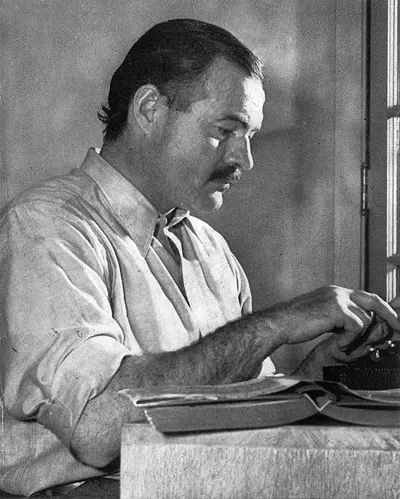
Ernest Miller Hemingway was an American novelist, short-story writer, journalist, and sportsman. His economical and understated style—which he termed the iceberg theory—had a strong influence on 20th-century fiction, while his adventurous lifestyle and his public image brought him admiration from later generations. Hemingway produced most of his work between the mid-1920s and the mid-1950s, and he was awarded the Nobel Prize in Literature in 1954. He published seven novels, six short-story collections, and two nonfiction works. Three of his novels, four short-story collections, and three nonfiction works were published posthumously. Many of his works are considered classics of American literature.
