Adam Smith Quotes
[Beware of] politicians who promise some plausible plan of reformation in order to new-model the Constitution
Adam Smith, 1723-1790, Scottish Political Economist, Quoted in Niall Ferguson, “Scots Must Vote”, New York Times, September 15, 2014
Sourced by: Eigen's Political and Historical Quotations


This president served his terms as allowed by the Constitution but then moved to change the constitution so that he could be the dictator as perpetual president. The purpose of constitutions is to limit and control the day to day political process and processes of reform. This stands the purpose of a constitution on its head. Modern totalitarian states almost all have constitutions. However where they differ from democracies is that the dictatorships ignore their constitutions, constantly suspend them in “emergencies” or change them at will to serve the interests of the ruling authorities. See {622125} for a Supreme Court Justice’s view of this kind of situation.

Huckabee, a fundamentalist Christian Minister in addition to being a politician, had been very tolerant of other religions and their rights. However, on the abortion question he seemed to be calling for a Constitutional amendment to make abortion illegal. The likelihood of passing such a Constitutional Amendment given the supermajority requirement was very low given the national division on this polarizing issue. A very careful reading of the candidate’s statement shows that he never literally advocated an amendment. He just stated that is would be easier to change the Constitution than to change the world of God which to believers was immutable. Thus his statement was true, yet some interpreted it as a very clever way of making a moral statement without committing to a course of action that would deny women the right to make decisions over the use and risks to their own bodies, souls, and lives.


There are some conservatives who accused Brennan of altering the Constitution from the bench by his opinions. However, there is an unending debate as to how the constitutional interpreters should deal with concepts and reality that did not exist at the time of the Constitutional Convention and were unconcieved of. Some justices like Brennan believe that the principles of the Constitution should be extended and extrapolated to modernity. Others believe that in the absen?ce of specific language even Supreme Court just should not try and extrapolate. Both are reputable views and as time and technology march ahead, the issue is joined more frequently. For example, the Founding Fathers did not conceive of atomic weapons. But they insisted that Americans have the right to bear arms. An atomic bomb is a type of arm—a weapon of war and defense. Does an individual American have the right to have his own atomic bomb?


This was an insult to the George W. Bush administration which had stretched the Constitution more so than any previous administration, had asserted Presidential powers that had never been asserted before and had had several of its more controversial policies and practices overturned by the Supreme Court.

“Cant” is another word for oratory or speech, but has a manipulative shade to it.


Politicians being interviewed and asked about their interest in higher positions are always reluctant to say that they are. Too much political ambition is unseemly with voters. However, if the politician claims little or no interest, if he chooses to run later, is accused of lying or being deceptive. So he/she tends to be ver evasive and find a way of claiming no present interest—saying ‘no’ but leaving loopholes for a later flip flop and change of mind.


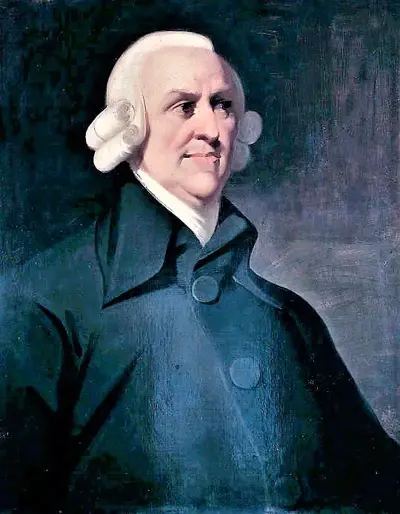
Adam Smith FRSA was a Scottish economist, philosopher as well as a moral philosopher, a pioneer of political economy, and a key figure during the Scottish Enlightenment, also known as ''The Father of Economics'' or ''The Father of Capitalism''. Smith wrote two classic works, The Theory of Moral Sentiments (1759) and An Inquiry into the Nature and Causes of the Wealth of Nations (1776). The latter, often abbreviated as The Wealth of Nations, is considered his magnum opus and the first modern work of economics. In his work, Adam Smith introduced his theory of absolute advantage.
