Robert Toombs Quotes
Besides, we had a large debt, contracted at home and abroad in our War of Independence; therefore the great power of taxation was conferred upon this Government.
Toombs, Robert. Speech of Hon. Robert Toombs, Delivered in Milledgeville, on Tuesday Evening, November 13, 1860, Before the Legislature of Georgia. Boughton, Nisbet & Barnes, State Printers, 1860.


“Commercial imposts” are customs duties. These actually provided virtually all of the tax revenue for the early American nation. Hamilton, realized, and prepared those who would ratify the Constitution that there would have to be additional forms of revenue of the growing nation. Nonetheless, there are a few today who argue that the customs duties are the only legitimate form of Federal taxation as that was what was in existence in early America. This quotation shows that the founding fathers did not intend that the nation be bound to that single mode of taxation.


This quotation was used throughout American history. See Oliver Wendell Holmes {603715}, Daniel Webster {37299}. Maurice L. Duplessis of Canada had a contrary variant: {600341}.


Although the Professor was often right about this technique, at the time he made this statement, the Clinton administration was actually cutting spending and using much of the revenue to pay for the deficit—just the opposite of what the Professor was worried about. It was successful and the deficit was eliminated and surpluses were projected. However the succeeding administration more closely followed the professor’s pattern and increased spending enormously for serious needs, but also cut taxes, so that we went during the Bush administration from the largest projected surplus in American history to the greatest deficit in American history.

This is opposite to the view that the power to tax is the power to destroy. See Oliver Wendell Holmes {603715}, Daniel Webster {37299} and John Marshall {320000}.

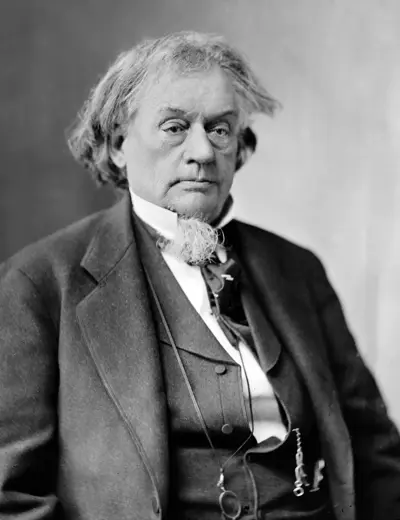
Robert Augustus Toombs was an American lawyer, planter, and national politician from Georgia who became one of the organizers of the Confederacy and served as its first Secretary of State under President Jefferson Davis. He also served in the Confederate States Army, but later became one of Davis' critics. After the Confederate defeat, Toombs fled the United States. He did not return until 1867, after his daughter's death. He regained political power in Georgia as Congressional Reconstruction ended in 1877.
