Michael Bloomberg Quotes
Being a fiscal conservative is not about slashing programs that help the poor, or improve health care, or ensure a social safety net. It's about insisting services are provided efficiently, get to only the people that need them, and achieve the desired results. Fiscal conservatives have hearts too — but we also insist on using our brains, and that means demanding results and holding government accountable for producing them
Michael Bloomberg, Mayor of New York City (Republican and Democrat), Speech, British Conservative Party, England, September 30, 2007
Sourced by: Eigen's Political and Historical Quotations

Bloomberg was one of the few people who say the meltdown of 2008 coming. His principle of saving a surplus for spending in the downturns, which served New York so well goes against most Democrat and Republican politicians. If there is a surplus, the Democrats want to spend it. The Republicans want to cut taxes and return the surplus. Neither is prepared for an economic slowdown.


Whether or not our USAID officials are tough on a bureaucracy or a government unfortunately has had little to do with whether they had used to money for services to the poor, but how the nation voted in support of the United States in the UN and engaged in other political acts perceived by the State Department and the Administration to be favorable to the United States.


The Republicans had lost the 1960 Presidential election narrowly with the moderate wing of the party in control. Goldwater argued that to win, the appeal must be much more conservative and that what characterized the campaign with the right wing of the party in control. This time, the Republicans were trounced by one of the largest margins in history.


Goldwater was the first Republican Presidential Candidate since the end of WWII who had campaigned for smaller government and reduced government spending. He actually started the modern Republican trend toward campaigning on this theme. Ronald Reagan did a much better job of campaigning on this theme, and all Republican Candidates since have campaigned on these two themes. It is not clear whether the Republicans were actually serious about this or just ran on the themes to please the political wing that Goldwater had started or meant it but were not good enough at running the government to fulfill this promise. Every Republican President from Reagan through George W. Bush increased the government spending and increased the number of government employees—more so than most Democrats ironically. Democratic President Bill Clinton was the only post WWII president to cut spending, produce a surplus and diminish the size of the government bureaucracy. Goldwater was so intellectually honest that had he won, he probably would have done everything he could to implement the policy of smaller government and less spending.

Colman’s view that business failures contributing to society may be more important than the contributions of the wealthy and successful has been a common theme where failed business men make great politicians (Truman) or failed politicians are appreciated as great philosophers (Paine). This seems to be the first American argument that a failed economic enterprise can have a very beneficial short and/or long term effect on economic development. The failed business could start an entire industry which succeeds later when technology or capital becomes more readily available, or even if implemented by a better manager. Arguably, the California gold rush miners never made any significant money, but their presence changed the economic fact of California. The American airline industry has made little or no money in its history but has enabled development throughout the nation. And the dot com bubble may well have been an economic debacle of the end of the 20th century, but it spurred economic development that has benefited the entire globe.

A minority group of very conservative members of the House of Representatives had decided to hold America’s full faith and credit and the economy hostage to implementing their minority proposal to reduce government spending more than the majority wanted shortly after the 2012 election where the voters had rejected the conservative position. None the less, they were threatening to force the government to default and not pay for the items that the Congress had previously already approved by not approving a debt ceiling increase. The President was determined not to negotiate with “hostage takers” and making sure that America paid its bills for the money spent as authorized by Congress.


Reading this quotation illustrates how some things in America change hardly at all over time. His description of the conservatives of his day, was the same that a liberal might make 60 years later. This quotation illustrates the statements of White that caused conservatives to dislike him. However, most historians agree that White passed classified information to the Russians. He was accused of being a Communist, but there was never any evidence of that. Some people believe that he was a spy for the Russians and committed espionage, but others disagree observing that White was very much his own man and felt that much information that was classified never should have been. White substituted his own judgment, it is believed, about what could be given to the Russians. He was an admirer of what Russian socialism had accomplished economically, educationally and medically since the 1917 revolution deposing the Czar. Russia had been a valuable military ally, which had taken the brunt of both military and civilian casualties in WWII. White’s economics were certainly not Marxist but very much Keynesian. He was subpoenaed by the House Un-American Activities Committee where he was accused of being a Communist which he denied (see {634907}). He died of a heart attack 3 days later.


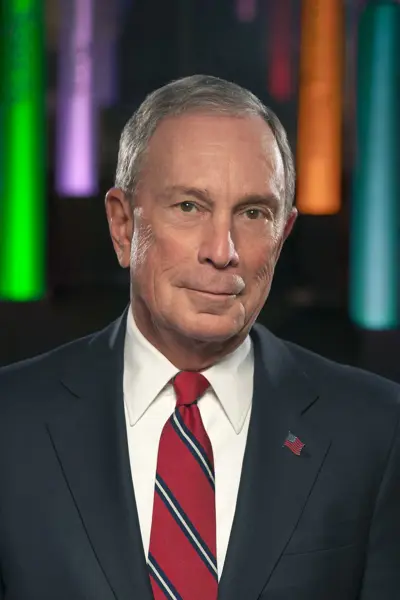
Michael Rubens Bloomberg is an American businessman, politician, philanthropist, and author. He is the majority owner and co-founder of Bloomberg L.P. He was the Mayor of New York City from 2002 to 2013, and was a candidate for the 2020 Democratic nomination for president of the United States.
