Samuel Gompers Quotes
Beer is a refreshing, nutritious, non-intoxicating drink which would satisfy most working men.
As opposed to whisky, gin, and rum which he thought were intoxicating. He felt that working men would be satisfied if beer were legal and liquor repealed. During prohibition it is surprising to us today that so many figures actually believed that beer was not an intoxicating drink—much less the cause of most American intoxication as it would become by the 21st century.
Samuel Gompers, 1850-1924, President, American Federation of Labor, Quoted in David Kyvig, Repealing National Prohibition
Sourced by: Eigen's Political and Historical Quotations

Lippmann was one of the most educated and respected men of his day. Yet he erroneously thought that alcohol would help depression. It actually is a depressant and should be avoided by all who are suffering from depression.


Drug prohibition and control can be Unlike most countries Cocaine and Opiates were sold very aggressively in the United States. In many cases it was for medicinals where the user had little or no idea of the active ingredient. Patent Medicine vendors sold their wares through almost every possible outlet in American commerce. See {617350}.

3rd Earl Russell of Kingston

Big Bill Haywood. Historically, the upper economic and business class, including currently, tend to view all labor organizations and unions as socialistic and or communistic and attach them for being such. However, in many industries in America today labor has a great deal of power and the industries are not socialistic or communist. The IWW however was one of the labor organizations that was based on socialism and contained many communists over the years. Haywood himself was a leader of the Socialist Party and campaigned for Eugene Debbs. Like Debbs he was convicted of an unconstitutional law of speaking against the WWI draft. Unlike Debbs who went to prison and was released later, Haywood skipped bail and lived in Russia for the rest of his life.


The article he wrote was the first serious plan and proposal to repeal Prohibition which was opposed by most people after the country had experienced the negative unintended consequents of making alcohol illegal. This was not unlike the second thoughts that many Americans began to develop regarding the War on Drugs at the end of the 20th century. Many felt the good that prohibition did (it improved the nation’s health) was not worth the bad that came with it (crime, corruption, police brutality, disrespect for the law.)
The article he wrote was the first serious plan and proposal to repeal Prohibition which was opposed by most people after the country had experienced the negative unintended consequents of making alcohol illegal. This was not unlike the second thoughts that many Americans began to develop regarding the War on Drugs at the end of the 20th century. Many felt the good that prohibition did (it improved the nation’s healt) was not worth the bad that came with it (crime, corruption, police brutality, disrespect for the law.)


This futuristic work attempted to project American life in the year 2000—then 112 years in the future. It is remarkable how many elements he successfully predicted. In this famous quote, he correctly anticipated the growth of small businesses, the transition possibilities between workers and employers. At the time, workers and employers were distinct social and economic classes with much hostility between them and relatively little class mobility. Conflicts—even bloody ones—between labor unions and employers were common. Very fascinating is his prediction regarding labor unions. At the time a minority of workers were members of unions and much of the labor strife was caused by companies trying to prevent unionization and unions trying to organize more workers. 60 years after this prediction Bellamy appeared to have been wrong in that the labor movement had grown tremendously and much larger percentage of the workforce were Union members. However, the percentage of unionized workers began to decline and by the year 2000—his target year of his prediction—a comparatively few workers were union members. While labor leaders of 2000 would argue that unions were needed as much as ever, the vast majority of the workforce tended to agree that they had become unnecessary.


Sunday was a leading prohibitionist.


When Washington was younger and running for the colonial Virginia assembly, he bought beer and rum for all the voters in his precinct. He did not then realize the damage that alcohol can do. One of the commonalities between Lincoln and Washington were their experience in seeing alcohol cause the death and/or ruination of many. See {630832}.

With Prohibition, the demand for alcohol was the same as ever, but the supply was restricted. Since much of the alcohol in the south was produced in illegal stills, Prohibition, did not affect the supply from those sources. As a matter of fact history shows that they ramped up production to fill the supply gap that was created by Prohibition. The North had very few illegal stills before Prohibition and there was very little capability to replace the legal sources that Prohibition had curtailed.
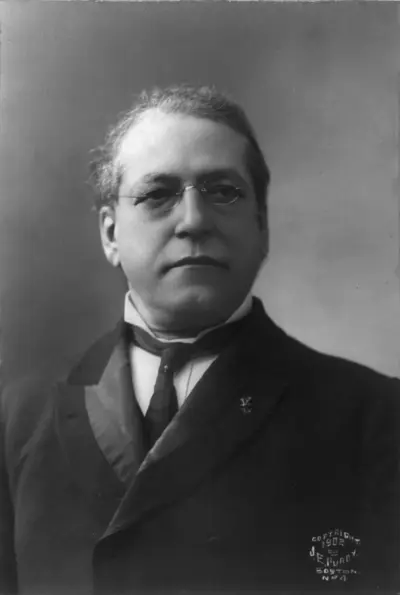
Samuel Gompers was a British-born American cigar maker, labor union leader and a key figure in American labor history. Gompers founded the American Federation of Labor (AFL), and served as the organization's president from 1886 to 1894, and from 1895 until his death in 1924. He promoted harmony among the different craft unions that comprised the AFL, trying to minimize jurisdictional battles. He promoted through organization and collective bargaining, to secure shorter hours and higher wages, the first essential steps, he believed, to emancipating labor. He also encouraged the AFL to take political action to "elect their friends" and "defeat their enemies". He mostly supported Democrats, but sometimes Republicans. He strongly opposed Socialists. During World War I, Gompers and the AFL openly supported the war effort, attempting to avert strikes and boost morale while raising wage rates and expanding membership.
