Shoghi Effendi Quotes
Bahais are not pacifists since we uphold the use of force in the service of justice and upholding law. But we do not believe that war is ever necessary and its abolition is one of the essential purposes and brightest promises of Bahá’u’lláh’s revelation.
Shoghi Effendi, 1897-1957, Guardian of the Bahai Faith, Letter, August 15, 1957
Sourced by: Eigen's Political and Historical Quotations


He served as a General in both the French and Russian Armies


While Queen Mary was presenting medals to British soldiers during World War I, she said this to a soldier who had exclaimed “No more bloody wars for me”.


Theodore Roosevelt was the Presidential nominee. Johnson was a leader of some members of Congress some of whom were extreme isolationists and some of whom were Nazi sympathizers and Hitler admirers. When the Japanese attacked Pearl Harbor later that year, Germany, fulfilling its treaty with Japan, declared war on America, Johnson’s group no longer mattered. Before WWII most Republicans were opposed to Defense Spending and accused the Democrats of being war hawks. After WWII, they flip flopped and became more hawkish than the Democrats who they accused of being soft on defense for years thereafter. See {631380} for President Roosevelt’s different view.

The Syrian Civil War created a great dilemma for pacifists. The government of Syria was murdering civilians in large numbers if they were in areas suspected of containing rebels. Diplomacy and sanctions would not stop the slaughter. It appeared that the only way to stop the murder of so many civilians was to use military force against the Syrian government. Junger posed the moral dilemma this way.


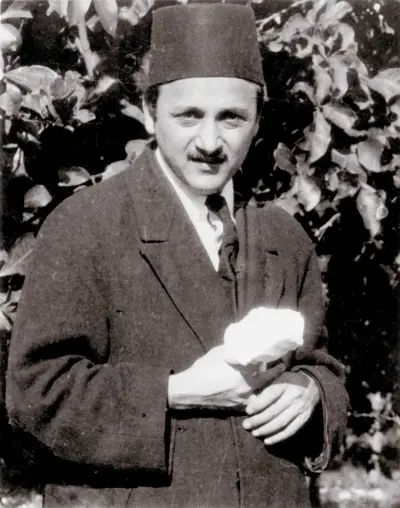
Shoghí Effendí was the grandson and successor of ʻAbdu'l-Bahá, appointed to the role of Guardian of the Baháʼí Faith from 1921 until his death in 1957. Shoghi Effendi created a series of teaching plans that oversaw the expansion of the faith to many new countries. He also translated and provided authoritative interpretation of many of the writings of the Baháʼí central figures. He was succeeded by an interim arrangement of the Hands of the Cause until the election of the Universal House of Justice in 1963.
