Clovis I Quotes
Ay, but this boy will conquer you!
Clovis did and the Romans were routed.
Clovis I, 466-511, King of the Franks, Statement to the Roman General who laughed at the mere “boy” across the battle field as the armies faced each other
Sourced by: Eigen's Political and Historical Quotations


Some Mexicans have always resented the U. S. for “colonizing” Arizona and other territory that once belonged to Mexico. This quotation is very revealing concerning the reality on the ground. The Apache were on the land when the Mexicans moved in to “civilize” the territory. However, the Apache, by violence, drove the Mexicans out. At that point the Mexicans were happy to sell Arizona to the Americans and the Gadsden Purchase brought Arizona to the United States as a territory. The Americans however didn’t buy the land from the Apache, the owners before the Mexicans claimed it. Many Apaches continued the violence against whoever tried to settle in the area. Eventually, the Americans accomplished what the Mexicans did not—militarily subduing the Apache.

There is a corollary to this proverb, that frequently reflects itself in Arab culture. It is that one who is not strong must never concede. To concede out of strength is manly and noble. To concede out of weakness is cowardly and base. Middle Eastern International politics is totally irrational to Westerners when a badly defeated country of group will often not even meet with the victors to discuss peace or terms of surrender. It is the victors only who can make concessions without losing dignity and respect.

America had more than one ancient exemplar of the problem of the Iraq War. The great Carthaginian General Hannibal was brilliant in war but tended to lose the benefits of victory by lack of planning and poor administration and geopolitical strategy. He could never “win the peace.” See {589454} for his view of the two phases of conflict.


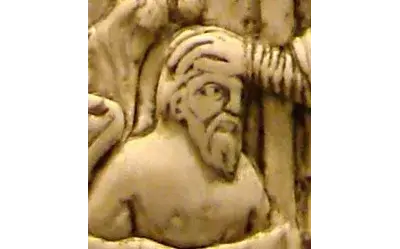
Clovis was the first king of the Franks to unite all of the Frankish tribes under one ruler, changing the form of leadership from a group of royal chieftains to rule by a single king and ensuring that the kingship was passed down to his heirs. He is considered to have been the founder of the Merovingian dynasty, which ruled the Frankish kingdom for the next two centuries.
