Thomas Otway Quotes
Avoid the politic, the factious fool,
The busy, buzzing, talking harden'd knave;
The quaint smooth rogue that sins against his reason,
Calls saucy loud sedition public zeal,
And mutiny the dictates of his spirit.
Otway, Thomas. The Orphan, or, The Unhappy Marriage. R. Bentley and M. Magnes, 1680, Act 2, Scene 1.

In 1956, Democratic presidential candidate, Adlai Stevenson, had suggested a nuclear testing ban. The then Vice President made his extreme accusation. See {619523} for another Nixon smear of Stevenson.


Before the 1968 election, President Johnson, and gotten the North Vietnam Communists to agree to Peace Talks with the U. S. and South Vietnam. Then Candidate Nixon thought that if the peace talks were ongoing and making progress, there would be more support for the Democrats and Nixon's opponent Hubert Humphrey. So Nixon secretly send a secret emissary to South Vietnamese President Nguyen Van Thieu telling him that he would not get a very good deal because President Nixon claimed that President Johnson was too eager to end the Vietnam war. He suggested that if Thieu boycotted the peace talks, then when Nixon was elected, he would guarantee a much better deal for South Vietnam and Thieu personally. President Thieu boycotted the peace talks and there could be no progress. However there is a Federal Law, the Logan Act, that makes it a felony for a private American citizen to conduct or interfere with foreign policy or negotiations with a foreign government. President Johnson found out about Nixon—s sabotage of the Peace Talks, called Nixon and threatened him with prosecution if he interfered further. LBJ had decided that with the left wing at odds with the U. S. Government over the Vietnam War, a prosecution of Nixon would cause the Right Wing to challenge the government also and the country didn—t need further polarization. He would do that only if Nixon did not heed the President—s warning. But when Nixon won the election and became President, he was terribly anxious that his pre-election crimes would be made public, and spent much of his time and staff effort trying to find out who knew about his politically self-serving felony and who might make his crime public. See {583264}.

Referring to the actions of United States Attorney General, Edwin M. Meese III, in the Wedtech case. This was a very unusual situation where a United States Attorney publicly admits to the bad behavior of a former Attorney General.
In 1993 Mooshood Abiola was the apparent victor in the Nigerian presidential election, but the election was `nullified' by the previous President and military dictator, General Ibrahim Babangida. Abiola announced he would attempt to form a government anyway.

Referring to Mohandas K. Gandhi, 1869-1948:


Referring to the defendant, U.S. Congressman Mario Biaggi, in a corruption trial:

With martial law came the authority to seize ALL guns in the colony for the emergency. This was not to disarm the general populace. It reflected the fact that there were relatively few colonists who owned guns as they were very expensive. The Governor could take those that existed and use them to defend against the rebels or whatever. There were more gun owners in the Revolution but still a minority. Even after the War of 1812 only 30% of Americans were armed, and that shortly decreased to 10% as there was no real culture of gun ownership in early America. This would come around the Civil War.

McCarthy was one of the most interesting political phenomena of politics in the 1950s. He was an alcoholic megalomaniac who made wild accusations about communists everywhere and that the Secretary of State and other politicians were communists. He claimed to have a list of thousands of communists in high positions of government. His accusations were so dramatic that most people assumed that there were facts behind them otherwise no rational man would say such things. But it turned out that not a single accusation was ever proven. When McCarthy was esposed, he was censured by the Senate and he lost most of his political credibility and shortly thereafter died as a result of his severe alcoholism.


Historically, most of the revolutionary leaders are the sons (and daughters) of upper class and upper middle class parents. They generally have had a good education and are intimately familiar with the foibles of the ruling class.

The Roman Catholic Defender Organization had about 300 thousand volunteers, and Belfast was the central location of the Defender leaders.

He was of course not the President then. But the stands that politicians took with respect to the rebellion of the South often determined their political futures. See {640751} for another future President’s quotation on the subject.

This was his name for the wealthy slaveowners in Tennessee. He was the military governor of Tennessee when he so labeled the secessionists.


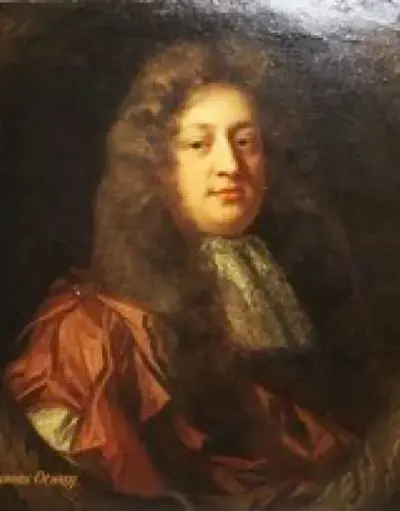
Thomas Otway was an English dramatist of the Restoration period, best known for Venice Preserv'd, or A Plot Discover'd (1682).
