John Milton Quotes
Avenge, O Lord, thy slaughtered saints, whose bones Lie scattered on the Alpine mountains cold; Ev'n them who kept thy truth so pure of old When all our fathers worshipped stocks and stones Forget not.
Milton, John. "Sonnet 18: On the Late Massacre in Piedmont." Poems, &c. upon Several Occasions, Thomas Dring, 1673, lines 1-5.


This sura is interpreted in two ways. For many modern Muslims it means that in discussions and debates on religion with non-Muslims, do not back off, and if you do it is a religious transgression. Defend the faith. For the fundamentalists and extremists, they interpret the same sura in physical warlike terms. So if there is a fight or battle with disbelievers, retreating from the battlefield is not only cowardice and perhaps a crime under military regulations as it is in the West, but it is in Christian terms a mortal sin for which there one will go to hell. So the most religious of Muslims will fight to the death using this sura as their guidance. On the other hand, Muhammad himself as the military and civil leader of Islam made strategic retreats. In the history of almost all warfare between the West and Muslims—especially the Arabs—courage on the battlefield has been lacking and the Israelis, British, French, Americans, and Hindus of India all observe this military weakness and accounting for this is built into their military doctrine.
See {586041} for a Koranic quotation that urges world domination by Islam. In this quotation, The Prophet was talking to his followers at a time when Islam was not even a dominant religion in Arabia. And war was the way in which tribes, groups, and religions and sects, established themselves and grew. Although there are other Koranic passages which tell the faithful that people can only legitimately come to Islam through individual commitment and willingly, this passage not only seems to contradict that but also reflects a desire to punish and disgrace “non-believing” groups. This vengeance motif is also contradictory to much else of the Koran which generally preaches love, forgiveness, and understanding. However, there are contradictions and intellectual inconsistencies within the Koran just as there are within the Old and New Testaments.

Although they were a Christian sect, there was not a lot of tolerance then by the Catholic Church especially for Christians who theologically deviated slightly from official doctrine. Ironically, the Muslims who conquered Egypt and Syria were much more tolerant of the Syrian Christians than their fellow Christians were. See {634767} for his view of Islamic tolerance.

Constantine the Great. This is one of Constantine’s major defenses of his decision to adopt Christianity. Scholars today still argue as to what part practical politics played in Constantine’s conversion and what part was his personal religious conversion.


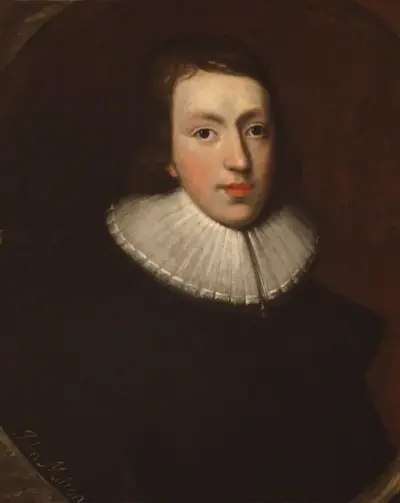
John Milton was an English poet and intellectual who served as a civil servant for the Commonwealth of England under its Council of State and later under Oliver Cromwell. He wrote at a time of religious shifts and political instability, and is best known for his epic poem Paradise Lost (1667). Written in blank verse, Paradise Lost is widely considered to be one of the greatest works of literature ever written.
