Mustafa Kemal Ataturk Quotes
Authority, without any condition and reservation, belongs to the nation.
Atatürk, Mustafa Kemal. Atatürk'ün Söylev ve Demeçleri, Vol. I. Türk İnkılap Tarihi Enstitüsü, 1959, p. 122.


This was a prevailing philosophical view in England and other monarchies. American Founding Fathers were quite familiar with Hobbes’ works and views and many specifically rejected it. Some of the Federalists wanted to extend some of the traditional prerogatives of monarchy to the American Presidency while the Jeffersonian Republican Democrats wanted the executive treated like any, one else before the law. Today that view generally holds, but there is a vestige of the Hobbes’ view still present in things like Executive Privilege.


The assumption of one supreme authority being necessary for a state, has been the most common assumption in almost all cultures and times before the American Revolution. What is amazing is that the Founding Fathers rejected this notion in favor of our complex system of checks and balances restrained by a Constitution which no society had ever tried before. England in contrast as it became more democratic, simply shifted the supreme, uncontrollable entity from the King to the Parliament which it is even today. Parliament can do virtually anything unrestrained by anything except their judgment and tradition.


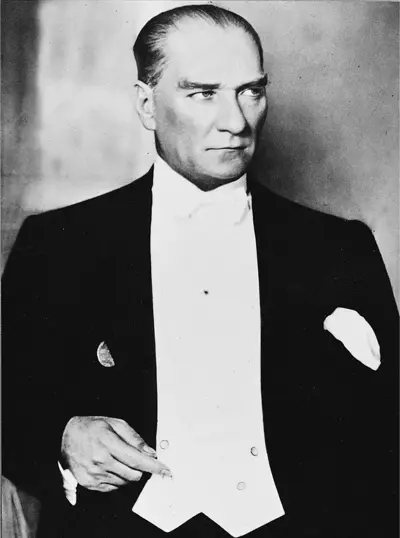
Kemal Atatürk was a Turkish field marshal, revolutionary statesman, author, and the founding father of the Republic of Turkey, serving as its first president from 1923 until his death in 1938. He undertook sweeping progressive reforms, which modernized Turkey into a secular, industrial nation. Ideologically a secularist and nationalist, his policies and theories became known as Kemalism. Due to his military and political accomplishments, Atatürk is regarded as one of the most important political leaders of the 20th century.
