William Cowper Brann Quotes
[Attacking President William McKinley:] Why, if a man were to call my dog McKinley, and the brute failed to resent to the death the damning insult, I'd drown it.
William Cowper Brann, 1855-1898, Journalist, Editor & Reformer, Quoted in Nancy McPhee, The Book of Insults, 1978
Sourced by: Eigen's Political and Historical Quotations


This is the Admiral who commanded that invasion of Washington DC and the burning of the White House. It was in retaliation for the destruction of buildings in the American invasion of Canada that began the War of 1812.

The New York City comptroller was outraged by the new president of the Board of Alderman, former congressman Fiorello La Guardia, who later became mayor of New York. The two men clashed constantly, especially at meetings of the New York City Board of Estimate, where the comptroller made an unusual request of the chairman:


One of the mocking eulogies the nationalists and fascists used when burying alive their enemies.

Attila the Hun


He was leading the Gordon Highlanders of the British Army against the Boers during the Boer War. He was seriously wounded and could not go on himself with a charge he had ordered, However, waifing his sword he made this famous qutation. Particualrly noteorthy is the derrogatory terms which he used to describe the enemy--the Boers of South Africa. In many wars and cultures, one or more of the combatants, in order to overcome the avarage soldier's reluctance to kill an enemy, characterizes them as less than human. In this case, vermin, who were to be exterminated. There were two predominant groups of whites who came to South Africa, the English who were generally well-educated and were interested in trading with the exhisting inhabitants and investing in businesses using mostly native labot and the Boers. The latter were of Dutch and German origin, poor farmers with little or no land in the home country and little education. Their interest was to create a nation where they could own land to farm. And the lest expensive way for them to increase their farmland was to sieze it from the native Blacks and who were the major forces behind the racial discrimination which became apartheid. The British contolled the government and sought stability and as in most of the British Empire, they wanted English law to prevail including the rights of the Black natives. The Boers had left Europe for good and would thrive or not in Southern Africa. Proportiopnately, the English might have a career in South Africa or serve there for a few years. They were Englishmen in a foreign country. The Boers saw themselves as citizens of Southern Africa who were fighting the native Blacks for control of the land. The English legal system would not allow any of the land seizures and political discrimination that the Boers saw as existential for their survival in Africa. Soon, the Boers took more and more of the law into their own hands and saw English rule and dmination as inimical to their interests in Africa and they tried to create their own independent states in Southern Africa. That was the essense of the Boer Wars. Dick-Cunyngham was awarded the Victoria Cross, the highest military decoration of Great Britain, for his exploits in the Afghan War.


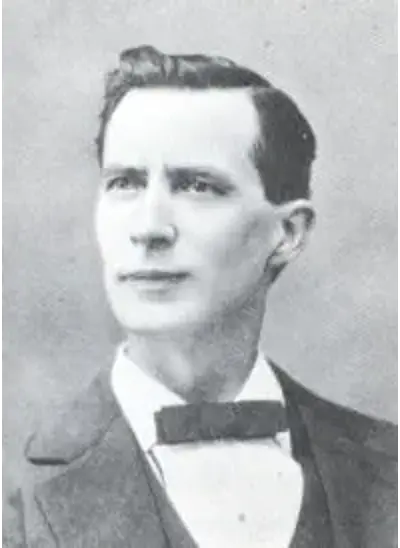
William Cowper Brann was an American journalist known as Brann the Iconoclast and famous for the articulate savagery of his writing.
