John Polanyi Quotes
At the heart of science lies discovery which involves a change in worldview. Discovery in science is possible only in societies which accord their citizens the freedom to pursue the truth where it may lead and which therefore have respect for different paths to that truth.
Polanyi, John C. "Science, Human Rights and the Culture of Peace." UNESCO, 1999.

In many nations, including the United States on occasion, governments have made laws as to what is valid science and what is not. Tennessee and other Bible-Belt States have and still do on occasion. The latest being Evolution, which even in the beginning of the 21st century, Kansas determined that it was not proven science, when it is as proven as any science has ever gotten.

The Scientific Project that developed the Atomic Bomb. Oppenheimer was the great physicist who directed the successful development of the atomic bomb so as to build the weapon before Hitler did in World War II. However, as the technology evolved, he had doubts as to the wisdom of creating even more powerful hydrogen weapons. His viewpoint was hurting the administration’s policy of rapid unlimited nuclear weapons development, and he was the victim of a character assassination whereby his security clearance was withdrawn. The “father” of the atomic bomb was the first American casualty of atomic weapons development.

Islamic modernists like Serageldin are many among the educated Muslims but their views are often drowned out by the violence and extremist statements of the fundamentalists.


The societies that had regularly produced the great advances in the sciences were those that allowed its citizens much liberty—liberty of thought, expression, association, etc. Where religious dogma controlled thought and expression, great scientific achievements were far less probable or less productive. Imagine, what Galileo might have achieved if the Church had not curtailed his efforts. When Islamic society was open, the sciences flourished whereas they were stifled in Christian Europe, but once Islam closed and liberty was no more, Islamic science degenerated to its low point of the 21st century.
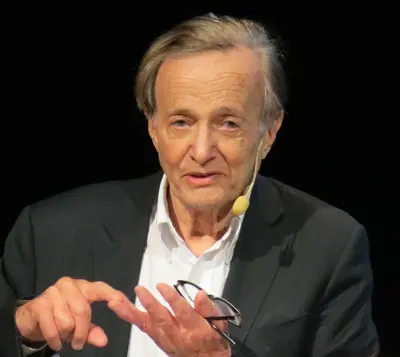
John Charles Polanyi, PC CC FRSC OOnt FRS is a Hungarian-Canadian chemist who won the 1986 Nobel Prize in Chemistry, for his research in chemical kinetics. Polanyi was born in Berlin, Germany prior to his family emigrating in 1933 to the United Kingdom where he was subsequently educated at the University of Manchester, and did postdoctoral research at the National Research Council in Canada and Princeton University in New Jersey. Polanyi's first academic appointment was at the University of Toronto, and he remains there as of 2019. In addition to the Nobel Prize, Polanyi has received numerous other awards, including 33 honorary degrees, the Wolf Prize in Chemistry and the Gerhard Herzberg Canada Gold Medal for Science and Engineering. Outside his scientific pursuits, Polanyi is active in public policy discussion, especially concerning science and nuclear weapons. His father, Mihály (Michael), was a noted chemist and philosopher. His uncle Karl was an economist. According to György Marx he was one of "The Martians", a group of prominent Hungarian scientists who emigrated to the United States in the first half of the 20th century.
