I. M. Pei Quotes
At the beginning, I thought the best Islamic work was in Spain - the mosque in Cordoba, the Alhambra in Granada. But as I learned more, my ideas shifted. I traveled to Egypt, and to the Middle East many times.I found the most wonderful examples of Islamic work in Cairo, it turns out. I'd visited mosques there before, but I didn't see them with the same eye as I did this time. They truly said something to me about Islamic architecture.
Jodidio, Philip. I. M. Pei: The Museum of Islamic Art, Doha, Qatar. Prestel, 2008, p. 15.


Not unlike modern times, the Khedive (ruler) of Egypt wanted Western technology and military assistance but there were many Muslim fundamentalists who hated Christians and Westerners. This was far before there was even a dispute about Palestine and what was to become Israel. The anti-Western behavior really dates back to the Crusades.

Nasir Khusaro Hamiduddin Abu Muin Nasir bin Khusaro bin Harith al-Qubandiyani

The Turkish Ottoman Empire controlled most of the Middle East and at times Arab areas and tribes would revolt. Egypt was considered the prize of the Middle East. The Ottomans not only controlled the Middle East militarily and civilly, but also religiously. The Turkish Sultan was the spiritual leader of almost all of the Middle Eastern Muslims.


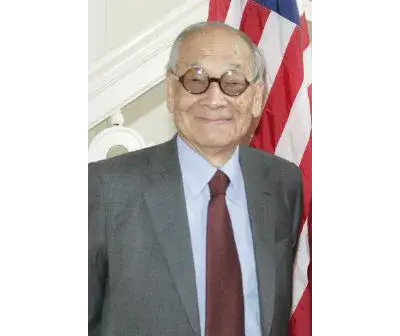
Ieoh Ming Pei, FAIA, RIBA was a Chinese-American architect. Born in Guangzhou, raised in Hong Kong and Shanghai, Pei drew inspiration at an early age from the garden villas at Suzhou, the traditional retreat of the scholar-gentry to which his family belonged. In 1935, he moved to the United States and enrolled in the University of Pennsylvania's architecture school, but he quickly transferred to the Massachusetts Institute of Technology. He was unhappy with the focus at both schools on Beaux-Arts architecture, and spent his free time researching emerging architects, especially Le Corbusier. After graduating, he joined the Harvard Graduate School of Design (GSD) and became a friend of the Bauhaus architects Walter Gropius and Marcel Breuer. In 1948, Pei was recruited by New York City real estate magnate William Zeckendorf, for whom he worked for seven years before establishing an independent design firm in 1955, I. M. Pei & Associates. In 1966 that became I. M. Pei & Partners, and in 1989 became Pei Cobb Freed & Partners. Pei retired from full-time practice in 1990. In his retirement, he worked as an architectural consultant primarily from his sons' architectural firm Pei Partnership Architects.
