My mother always says that fear and pain are immediate, and that, when they're gone we're left with the concept, but not the true memory.
Come on, is your heart a sponge or a fist?
When men die, they die in fear", he said. "They take everything they need from you, and as a doctor it is your job to give it, to comfort them, to hold their hand. But children die how they have been living - in hope. They don't know what's happening, so they expect nothing, they don't ask you to hold their hand - but you end up needing them to hold yours. With children, you're on your own. Do you understand?
I grew up in Cyprus and Egypt, these fantastic places I remember fondly.
In terms of people that I know, my grandmother and my mother are huge influences on my writing life because they are both massively supportive and always have been of my career.
At the end of the day, despite all the other great things that literature does in society and in a person's life, I think that we read to escape. And I think that place, more than anything, provides that escape quickly, if an author is engaged with the place.
When I was eight years old, I wrote a paragraph-long short story about a goat on my mother's hundred-pound, black-and-white-screen laptop. The story came about largely because I liked the way the word 'goat' looked on the page, but I decided then and there that I wanted to be a writer. That desire never changed.
We're all entitled to our superstitions.
I am very interested in place, and the influences of place on characters.
My road to publishing actually came through a colleague who connected me to my agent, and the faculty at Cornell was very supportive.
When I hit a block, regardless of what I am writing, what the subject matter is, or what's going on in the plot, I go back and I read Pablo Neruda's poetry. I don't actually speak Spanish, so I read it translation. But I always go back to Neruda. I don't know why, but it calms me, calms my brain.
What inspires me most to write is the act of traveling.
My grandfather and I were very close.
When you're in a place, the details you focus on are different than details you focus on when you're writing about it.
My family lived in Egypt from 1993 to 1996.
I like dark subject matter. I'm not sure what that means about me!
In the mess of moving from place to place, I skipped two grades in the space of one year.
For me it was a lot harder to come to terms with the death of my grandfather than it was to come to terms with what's happened to the former Yugoslavia.
I do no writing while I'm in Belgrade visiting my grandma.
I think the mythology of death really ran away with me when I was very young.
The best fiction stays with you and changes you.
You never know what's going to happen in your life, and you never know what's going to happen in someone else's life either.
Being taken seriously, for a young writer, is a wonderful form of encouragement, but at the same time, I don't think one should ever feel like attempting a kind of artistic endeavor is beyond your scope just because of age or inexperience.
A family has its own rituals and its own superstitions.
I've always written about animals. I'm still trying to process why that is.
A lot of writers that I know have told me that the first book you write, you write about your childhood, whether you want to or not. It calls you back.
At the end of the day, it's about the reader's attachment to and belief in the magical elements that make or break magical realism.
In the end, all you want is someone to long for you when it comes time to put you in the ground.
In my earliest memory, my grandfather is bald as a stone and he takes me to see the tigers.
The dead are celebrated. The dead are loved. They give something to the living. Once you put something into the ground, Doctor, you always know where to find it.
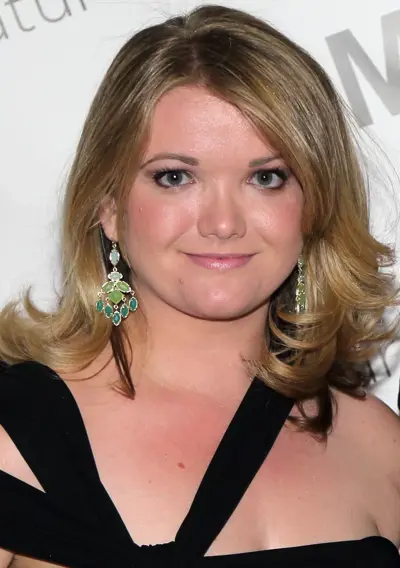
Téa Obreht is a Serbian-American novelist.