Vitruvius Quotes
At Jaffa in Syria and among the Nomads in Arabia, are lakes of enormous size that yield very large masses of asphalt, which are carried off by the inhabitants thereabouts.
Vitruvius. The Ten Books on Architecture. Translated by Morris Hicky Morgan, Harvard University Press, 1914, p. 235.


As a member of the Crow Tribe living on the Montana Crow Reservation, she recieved, alomg with all other tribal members, about $225 every quarter for the royalty payments that a commercal coal mining company paid on the coar that they mined on the Crow land. The demand for coal had been steadily decreasing for over a decade since coal was the worst of the fossil fules in terms of polluting the air and emitting greenhouse gases increasing the global warming. With the Fracking technology, oil had become much less expensive as was natural gas, making coal not only the dirtiest fuel for producing electricity but one of the most expensive whereas in the past it had been the least expensive. The Montana Crow Reservation was econmically destitute, with no industry, very little agriculture, and littel else to help the local economy other than the royalty payments for coal mining. In other parts of the country otehr Indian nations were giving up economic benefits that came from enviornmentally damaging commercial activity and there was some pressure on teh Crow nation to close the reservation to coal mining. Ms. Ten Bear Reed's quotation illustrated the great dilemma that she, the Crow, other Indian tribes and general citizens all over the country. For decades many areas of the country had been in economic recession, and poverty was endemic. The royalties from coal mining, oil drilling, pipeline right of way and other commecial activities that did or potentially threatened the enviornment was in many cases the only cash families and tribes recieved or it was a large proportion of their income. The moral dilemma was profound when there were chilren to feed and care for. it was much harder for the poor to be environmentally conscious than for people who were economivally better off.

Withdrawal meant not allowing certain public land to be sold or allotted to homesteading, commercial development, mining, industrial, ranching, or agricultural use. It was reserved as wilderness areas and/or national parks or forests.


Most people have no idea of how large a land mass the Arctic Circle is. Most of the Arctic has not even been explored or exploited yet. When it does, these percentages will doubtless increase.
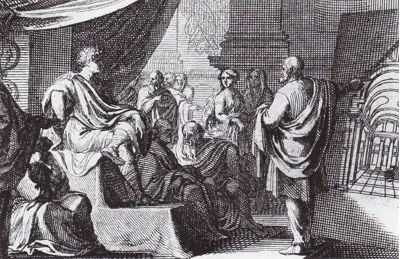
Marcus Vitruvius Pollio (/vɪˈtruːviəs ˈpɒlioʊ/; c. 80–70 BC – after c. 15 BC), commonly known as Vitruvius, was a Roman author, architect, and civil and military engineer during the 1st century BC, known for his multi-volume work entitled De architectura. He originated the idea that all buildings should have three attributes: firmitas, utilitas, and venustas ("strength", "utility", and "beauty"). These principles were later widely adopted in Roman architecture. His discussion of perfect proportion in architecture and the human body led to the famous Renaissance drawing of the Vitruvian Man by Leonardo da Vinci.
