Leon Bourgeois Quotes
At first, laws evolved out of religious doctrines. It followed that they were recognized only when advantageous to those who practiced the same religion and who appeared equals under the protection of the same gods. For the members of all other cults, there was neither law nor mercy.
Bourgeois, Léon. "The Reasons for the League of Nations." Nobel Lectures, Including Presentation Speeches and Laureates' Biographies: Peace 1901-1925, edited by Frederick W. Haberman, Elsevier Publishing Company, 1972, pp. 302-317.


The traditional Hindu social structure established castes – levels of society with Brahmins at the top and untouchables at the bottom. When India gained independence, the caste system was made illegal. Nonetheless, it is still followed by hundreds of millions of Indians. Religiously the Buddhists and the Hindus have had different philosophies. Ilaiah is a Buddhist who opposes the traditional Brahmin social structure and is a supporter of “Dalitization” – a change in the Indian culture to make the Dalits (untouchables) equal de juro and de facto.

This quotation illustrates that a narrow orthodox view of Islam is not the only one in Arab nations. Khaled is not an obscure cleric, but a popular television personality. While his views are considered heresy by many orthodox Muslims, the narrow view is by no means universal. Orthodox Islamists believe that God has commanded that all mankind be Muslims and the ones who are not are either ignorant so need to be “educated”, or evil and therefore should be killed. However, Muhammad ordained that an exception should be made for “Children of the Book”—Jews and Christians who revere the Old Testament. This was at a time when Christians would not allow any other form of worship but Christianity. Christianity, Judaism and most other religions have become tolerant of other religions and allow open alternative worship. Islam which early on led the way to tolerance, has in many countries gone back to the intolerance that existed amongst many Christians at the time of Muhammad.
His protest was focused on Middle East policies which he believed did not value the lives of Muslims as highly as Christians and Jews. The irony of this protest is that United States policy claims to value all life equally as do virtually all industrialized democracies. Omeish however is unusual among world Islamic leaders and politicians in that he values Christian and Jewish life as much as Muslim. Most, typically value Muslims almost exclusively and many advocate the killing of Christians and Jews.

This publication was one of the best selling in the entire history of America. Rarely has a single publication been read by as high a proportion of a population. Those who support the maintenance of a strict separation of Church and State in America often point to this quotation and the popularity of Common Sense as evidence that not only were the founding fathers in favor of strict separation but so was the general Colonial American public.

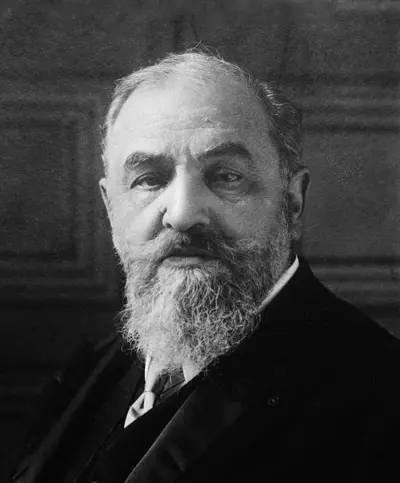
Léon Victor Auguste Bourgeois was a French statesman. His ideas influenced the Radical Party regarding a wide range of issues. He promoted progressive taxation such as progressive income taxes and social insurance schemes, along with economic equality, expanded educational opportunities, and cooperative solidarism. In foreign policy, he called for a strong League of Nations, and the maintenance of peace through compulsory arbitration, controlled disarmament, economic sanctions, and perhaps an international military force.
