Ludwig von Mises Quotes
As the liberal sees it, the task of the state consists solely and exclusively in guaranteeing the protection of life, health, liberty, and private property against violent attacks. Everything that goes beyond this is an evil. A government that, instead of fulfilling its task, sought to go so far as actually to infringe on personal security of life and health, freedom, and property would, of course, be altogether bad.
von Mises, Ludwig. The Free and Prosperous Commonwealth. D. Van Nostrand Company, 1962, p. 52.

To the pro-slavery politician, abolition was an abdication of government to fulfill it’s 3 major responsibilities. Slaves were private property and government had to safeguard the owner’s right to own that property. Slave owners had always been free in America to hold slaves, and abolition impinged on that freedom. And the slavery advocates knew better than the abolitionists how cruelly the slaves had been treated. They reasoned—that if anyone had treated them that way, they would if they could take revenge and kill the slave owners. Therefore, abolition threatened the lives of Southern citizens. Of course, Brown and his fellow slave-owners did not consider the fact that they had interfered with the right of the slave to own property, they denied him freedom, and in many cases killed slaves as examples or out of neglect. Their “logic” was that slaves were not citizens and therefor were not entitled to these protection.


In many countries, the king received all land and most property upon the death of a landowner.


While this was a strong central political principle for Reagan, a substantial part of his political party strongly advocated the against the government interjecting itself into people’s lives.


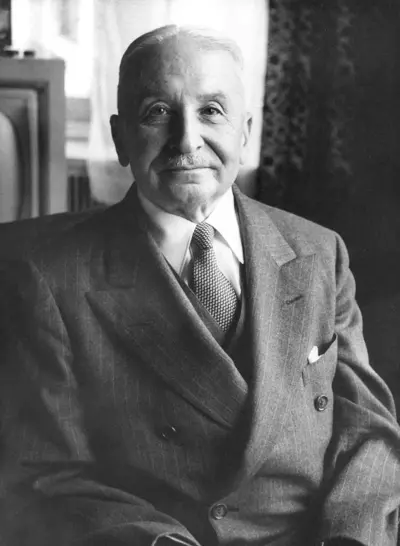
Ludwig Heinrich Edler von Mises was an Austrian School economist, historian, logician and sociologist. Mises wrote and lectured extensively on the societal contributions of classical liberalism. He is best known for his work on praxeology, a study of human choice and action.
