John Jacob Abel Quotes
As soon as we touch the complex processes that go on in a living thing, be it plant or animal, we are at once forced to use the methods of this science [Chemistry / Physics]. No longer will the microscope, the kymograph, the scalpel avail for the complete solution of the problem…. the investigator must associate himself with those who have labored in fields where molecules and atoms, rather than multicellular tissues or even unicellular organisms, are the units of study.
At the time few chemists or physicists were involved with biological and medical research, nor did the physicians and biologists of the day have much background or understanding of physics or chemistry. Abel was right on, and today the best medical and biological researchers have had extensive physics and chemistry research and much of the research is being conducted by multidisciplinary teams of scientists.
John Jacob Abel, 1857-1938, Biochemist, “Experimental and Chemical Studies of the Blood with an Appeal for More Extended Chemical Training for the Biological and Medical Investigator”, Science 1915
Sourced by: Eigen's Political and Historical Quotations


This is almost the universal belief of scientists—religious or not. The faith of religion, if extended to science, does not give the person the tools of logic, empiricism, and deduction that is so critical for the scientist. The cleric, in contrast, requires faith. Politicians split. There are many who have the outlook of the scientist. However, there are also political ideologues, who want faithful adherence to the doctrine, as the theological leaders does, and does not subject the doctrine to analytic scrutiny.


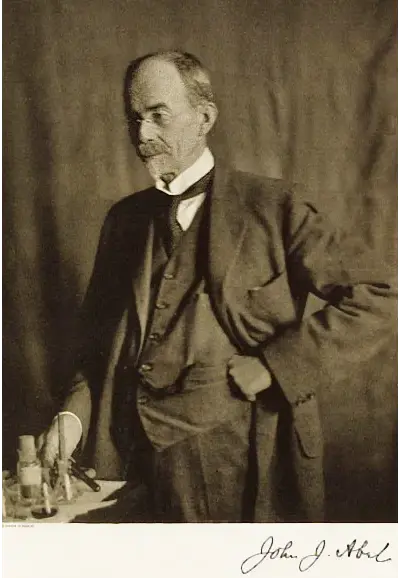
John Jacob Abel was an American biochemist and pharmacologist. He established the pharmacology department at Johns Hopkins University School of Medicine in 1893, and then became America's first full-time professor of pharmacology. During his time at Hopkins, he made several important medical advancements, especially in the field of hormone extraction. In addition to his laboratory work, he founded several significant scientific journals such as the Journal of Biological Chemistry and the Journal of Pharmacology and Experimental Therapeutics.
