C. V. Raman Quotes
It seemed, indeed, that the study of light-scattering might carry one into the deepest problems of physics and chemistry, and it was this belief which led to the subject becoming the main theme of our activities at Calcutta from that time onwards.
Raman, C. V. "The Molecular Scattering of Light." Nobel Lectures, Physics 1922-1941, Elsevier Publishing Company, 1965, p. 268.


At the time few chemists or physicists were involved with biological and medical research, nor did the physicians and biologists of the day have much background or understanding of physics or chemistry. Abel was right on, and today the best medical and biological researchers have had extensive physics and chemistry research and much of the research is being conducted by multidisciplinary teams of scientists.


This is almost the universal belief of scientists—religious or not. The faith of religion, if extended to science, does not give the person the tools of logic, empiricism, and deduction that is so critical for the scientist. The cleric, in contrast, requires faith. Politicians split. There are many who have the outlook of the scientist. However, there are also political ideologues, who want faithful adherence to the doctrine, as the theological leaders does, and does not subject the doctrine to analytic scrutiny.


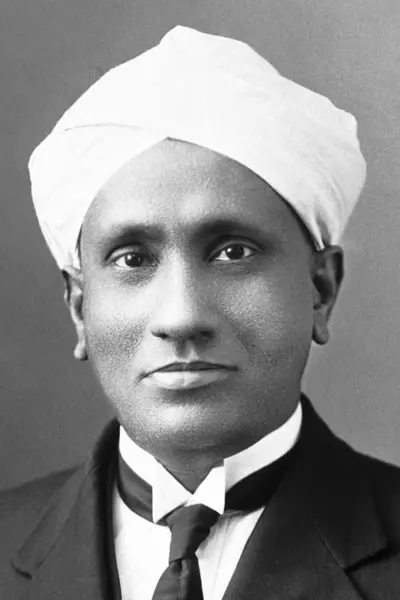
Sir Chandrasekhara Venkata Raman was an Indian physicist known mainly for his work in the field of light scattering. With his student K. S. Krishnan, he discovered that when light traverses a transparent material, some of the deflected light changes wavelength and amplitude. This phenomenon was a new type of scattering of light and was subsequently termed as the Raman effect (Raman scattering). Raman won the 1930 Nobel Prize in Physics and was the first Asian person to receive a Nobel Prize in any branch of science.
