Friedrich Bergius Quotes
As early as 1912, we worked on the problem of the hydrogenation of organic substances with the aid of highly compressed hydrogen.
Bergius, Friedrich. "Chemical Reactions under High Pressure." Nobel Lectures, Chemistry 1922-1941, Elsevier Publishing Company, 1966, pp. 244-276.


This is almost the universal belief of scientists—religious or not. The faith of religion, if extended to science, does not give the person the tools of logic, empiricism, and deduction that is so critical for the scientist. The cleric, in contrast, requires faith. Politicians split. There are many who have the outlook of the scientist. However, there are also political ideologues, who want faithful adherence to the doctrine, as the theological leaders does, and does not subject the doctrine to analytic scrutiny.

At the time few chemists or physicists were involved with biological and medical research, nor did the physicians and biologists of the day have much background or understanding of physics or chemistry. Abel was right on, and today the best medical and biological researchers have had extensive physics and chemistry research and much of the research is being conducted by multidisciplinary teams of scientists.


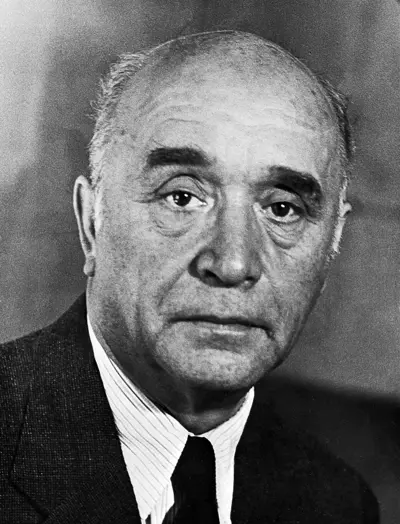
Friedrich Karl Rudolf Bergius was a German chemist known for the Bergius process for producing synthetic fuel from coal, Nobel Prize in Chemistry (1931, together with Carl Bosch) in recognition of contributions to the invention and development of chemical high-pressure methods. Having worked with IG Farben during World War II, his citizenship came into question following the war, causing him to ultimately flee to Argentina, where he acted as adviser to the Ministry of Industry.
