Bill Clinton Quotes
As long as the waving symbol of another American’s pride is the shameful symbol of another American’s pain, we have bridges to cross in this country and we better get across them.
The President was referring to the Confederate battle flag that flew over the South Carolina Capital while a majority of the State thought it should be removed to a different location.
William Clinton, 42nd President of the United States (Democrat, AR), Speech, Selma, Alabama, March 2000
Sourced by: Eigen's Political and Historical Quotations

The Georgia flag with the Confederate flag inset was adopted by the legislature in 1956 during the civil rights struggle. The Governor called for legislation bringing back the old flag.

Leading the debate which ended in the rejection of the United Daughters of the Confederacy to get a Congressional patent for their logo, which included an early Confederate flag:


Many believe that the Confederate flag symbolizes bravery and honor in battle, and therefore should be flown even in state government facilities as these are values which our governments hold. And that is true, but the same symbol also connotes, slavery, murder, racism, treason, hate, family destruction, brutality, and torture. Southern whites tend to acknowledge the bravery and honor but ignore the negative symbols. Most other Americans acknowledge the negatives but many tend to ignore the positive virtues.


Johnson was then Vice President.


The reason this quotation is important, it was the first time in American history that a President had tied racial discrimination to morality. Before that other Presidents had argued against segregation on pragmatic grounds or on legal, Constitutional grounds. Kennedy’s private moral declaration had a huge impact on Black leaders throughout the country who heard about it by word of mouth. That statement forged a bond between JFK and Blacks while most whites did not see anything striking in the statement.

The President often referred to this statement as an example of his wife’s acumen. She had been born to a Southern plantation and inherited the land and the slaves. Her view, and his, were typical of the Southern point of view in early America.


In 2010, Gates had written an Op-Ed in the New York Times. The subject was the role of some African Blacks in the slave trade. There was much criticism and negative reaction among some Blacks.


Instead of standing and saluting as professional athletes have done for decades before games, he kneeled and refused to stand. This caused great public criticism but also some initial support. He was potentially risking his multimillion dollar salary as this technically violated his contract to avoid anything embarrassing to the team. He also donated $1 million to programs in the area that were working to enhance Black/white understanding. Even those who disagreed with his choice of protest defended his right to do so, and after the initial furor, public opinion, while not in agreement about his method, tended to support him for having the courage of his convictions and using his celebrity for a worthy cause. After sensing the public opinion, his team matches his $1 donation. Professional athletes both in the NFL and in other sports then began to do the same as a form of protest for the large, disproportionate, number of black men who were killed, mostly when unarmed, by police. The reference to the “paid leave” was the practice followed by most police departments—usually required by collective bargaining agreements with police unions—of placing police officers accused of committing violations of laws or regulations on paid administrative leave while all the investigations, hearings, and other processes . While this practice protected the rights of those police officers who were not guilty, it ended up paying brutal murders for a some time entire their case was decided or acted upon be the district attorney.
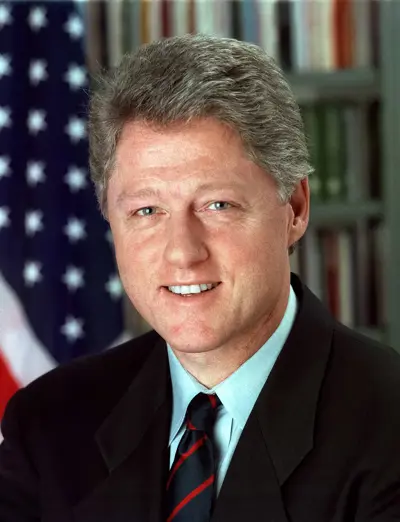
William Jefferson "Bill" Clinton is an American politician who was the 42nd President of the United States from 1993 to 2001. Clinton was previously Governor of Arkansas from 1979 to 1981 and 1983 to 1992, and the Arkansas Attorney General from 1977 to 1979. Clinton was born William Jefferson Blythe III – he changed to his stepfather's name at age 15.
