Paul Harvey Quotes
As industry's tycoons of the Thirties got their wings clipped, labor's leaders in the Eighties are getting their wings clipped. Not because of any class-related antagonism, but because any excess, ultimately, is its own undoing.
Harvey, Paul. "News and Comment." ABC Radio Networks, 1989.


Labor unions as we know them did not then exist. Calhoun and many others saw the struggle as a inherent class struggle, not unlike that particular view of Karl Marx. See {606584} for one his more extreme views on the subject.


The factory workers in Lynn, Massachusetts started their own newspaper: This was published four years before Marx and Engles published the Communist Manifesto


Roosevelt was awarded the Nobel Peace Prize for his peacemaking in the Russo-Japanese War.


At the time many workers lived in housing owned by their employer. When the Pullman company had a labor dispute, they not only locked the workers out of their jobs but evicted them from their meager housing.

He had squads of thugs that he would “rent” out to other gangsters for their enforcement activities and to unions to protect themselves from goons and intimidate non union workers. However, he would not let his men work as goons and strike busters or for companies—despite huge pay offers—to keep their workers in line, a common practice at the time.

One important observation of this quotation is the pejorative language Mises used to describe “Union Bosses” as opposed to “Union Leaders.” There were indeed a few Union “Bosses” but most unions had popularly elected leaders. It is similar to the left wing critic who refers to Corporate Executives as “Greedy Monopolists.” A few are but most are not. Historically, in the last half of the 20th century and the beginning of the 21st, the conservatives tended to be much better at pejorative language and used it more frequently and uniformly than the liberals who tended to be better in the last part of the 19th century and the first half of the 20th century.


Bear was the classic icon of the wealthy, insensitive, powerful, prejudiced snob. He even made other capitalists somewhat sympathetic to the complaints about corporations. See {593878} and {593879}.


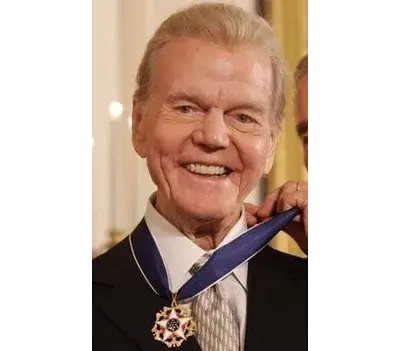
Paul Harvey Aurandt, better known as Paul Harvey, was an American radio broadcaster for ABC News Radio. He broadcast News and Comment on mornings and mid-days on weekdays and at noon on Saturdays and also his famous The Rest of the Story segments. From 1951 to 2008, his programs reached as many as 24 million people per week. Paul Harvey News was carried on 1,200 radio stations, on 400 American Forces Network stations, and in 300 newspapers.
