Dwight D. Eisenhower Quotes
As far as the satellite itself is concerned, that doesn’t give me any apprehension at all.
Dwight D. Eisenhower, 1890-1969, 34th President of the United States (Republican, KS), Statement after the Russians launched the first satellite into orbit, Sputnick, October, 1957
Sourced by: Eigen's Political and Historical Quotations

Dr. Snyder was the youngest physicist at Los Alamos working on the Atom Bomb Manhattan Project. His rocketry skill was used to fire probes into the highly radioactive area to obtain samples and measurements immediately after the test bomb was exploded.


Medaris then told him to do it in 90 days to give him some slack. 80 days later the U. S. put its first satellite in orbit with a Jupiter Rocket. There were scientists at the Jet Propulsion Laboratory who had been experimenting with rocket recovery, who realized that they had enough power and technique to escape the Earth’s gravity and put an object in orbit. The asked for permission to do so on their next weekly firing and were refused. Two months later, the Russians put Sputnick in orbit.

This was the first vehicle to be landed on a space object. On November 10, 1970, it was landed on the moon. It navigated, controlled by a driver on earth, for 9 months, sent back 22,000 pictures and conducted over 500 scientific experiments. A second was later landed also. It would be more than 20 years later that the United States developed and landed a rover vehicle on Mars. Lunokhod in Russian means “moon walker.” After the collapse of the Soviet Union, some of the Russian engineers who developed Lunokhod helped the U. S. scientists develop the Moon Rover.

Before the first airplane had flown, Tsiolkovsky had worked out the mathematics and physics to put a rocket powered scientific probe into orbit.


In 1980 Russian troops moved into Afghanistan, and President Jimmy Carter imposed an American grain export embargo against Russia:


Addressing his opponent, Richard Nixon:

At the end of WWII there was much tension between Russia and the Anglo-American alliance. This plan was developed but never implemented. See {613195} for Prime Minister Winston Churchill’s description of the invasion idea.

This was an incredible prediction with no other world leader thinking it possible for decades until that is exactly what happened.

This editorial marked what most people agreed was the end of the Cold War.


Truman had to deal with Stalin for many years and over time he became more and more soured on the Russians. See {626411} for his view 22 years later,
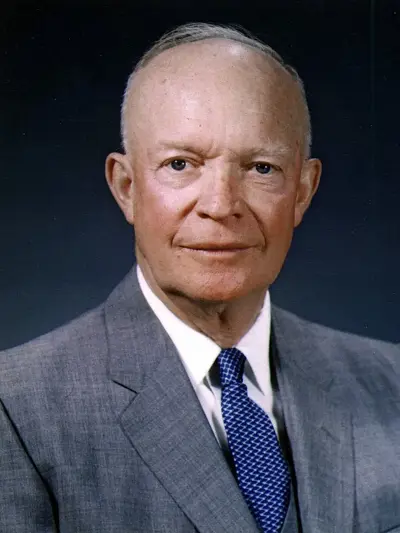
Dwight David "Ike" Eisenhower GCB OM GCS CCLH KC NPk was an American military officer and statesman who served as the 34th president of the United States from 1953 to 1961. During World War II, he became a five-star general in the Army and served as Supreme Commander of the Allied Expeditionary Force in Europe. He was responsible for planning and supervising the invasion of North Africa in Operation Torch in 1942–43 and the successful invasion of Normandy in 1944–45 from the Western Front.
