Norman Schwarzkopf Quotes
As far as Saddam Hussein being a great military strategist, he is neither a strategist, nor is he schooled in the operational arts, nor is he a tactician, nor is he a general, nor is he a soldier. Other than that, he's a great military man, I want you to know that.
Schwarzkopf, H. Norman. Central Command Briefing. Riyadh, Saudi Arabia, 27 Feb. 1991.


The Emperor was writing to his son to explain the defeat of Japan. In what was a bit of revisionist history, the Emperor neglected to mention that with the exception of some of the incursions in China, Hirohito had personally approved every Japanese invasion including Pearl Harbor. Further, it was he who had approved the orders that Japanese troops should fight to the death rather than retreat or surrender.


Von Stuben brought a formal discipline and organization to the American army and is referred to as “The Father of the U. S. Army.” Beaumarchais was a leading dramatist as well as a secret agent and his communiqués were doubtless the most flowery in the history of espionage and spying.

He lost the vote on this issue, and the Congress created the first committee to investigate and oversee military affairs.

MacArthur had been the Commander of our Military Forces in Korea. He had a huge ego, and he wanted to cross the border and attack China since Chinese Troops were aiding the North Vietnamese. He had previously assured the Joint Chiefs of Staff and the President that the Chinese would not send troops into Korea, but he was then wrong. And when they had attacked, they had erased the territorial gains that MacArthur had previously gained. The Joint Chief’s of Staff, the Secretary of Defense and the Secretary of State had decided upon a strategy which this time did not follow MacArthur’s strategic advice. The President approved the strategy, but MacArthur spoke and acted contrary. The President met with MacArthur and reiterated the strategy that the President approved. But MacArthur did not follow the orders of the Joint Chiefs. At the time, he and Eisenhower were America’s two most famous military leaders, and of the two MacArthur was senior and thought that he should be President. After he was fired, MacArthur addressed a Joint Session of Congress and gave his "Old Soldiers Never Die" speech which was his first active step towards the Presidency. It was a very sentimental speech with little content and nothing about why he had disobeyed orders. He was totally shocked when it was Eisenhower who was selected to run for President and not him.

The General refused. He had already achieved a strategic victory and it was only a matter of time when the Dutch would withdraw on their own as their supply lines were cut off and the populations wanted them out.


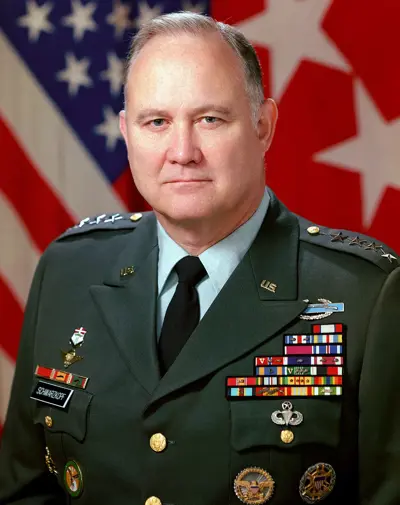
Herbert Norman Schwarzkopf Jr. was a United States Army general. While serving as the commander of United States Central Command, he led all coalition forces in the Gulf War.
