Simon Sebag Montefiore Quotes
As a teenager, I had a weakness for freedom fighters. When Mugabe came to London to negotiate independence, I vanished from home to stand outside his hotel. I was very disappointed that he looked like a dorky teacher.
Montefiore, Simon Sebag. Interview. The Independent, 29 May 2011.


Churchill was reported to be so angry and exasperated that his face turned red and he was sputtering. During World War II, Gandhi, Nehru and other Indian Nationalists were leading protests against British control of India. This not only bogged down British soldiers surprising the nationalists rather than fighting in Burma or in other war theaters, but India supplied a huge number of battalions to the British Army the world over and if that manpower dried up, the allied war effort would suffer. The American State Department wanted Churchill to announce that after Japan was defeated, there would be a process toward self-government. This way, they thought, the Indians would redouble their effort to defeat the Japanese and stop the then current protests and strikes. Churchill was strongly opposed to any diminution of the British Empire, but beyond that, he knew India quite well and realized that at any hint of Independence the large Muslim minority in India would insist on autonomy or a partition of the country and use sectarian violence and terror to intimidate the Indian Congress party and the British, but the major victims of the terror—the Hindus and the Sikhs would not remain passive, but would retaliate in kind. President Roosevelt was in the midst of planning the Normandy Landings of the D-Day invasion and did not want to pressure Churchill and the British at this point in time, so the door to independence was not opened during the war and Britain had to deal with the protests throughout. However, when, after the war, the Labor Government, started a process toward Indian independence which resulted in exactly what Churchill predicted. At least 2 million Indians were slaughtered in the internecine terrorist cycles of fear and retaliation motivated terror attacks what were so extensive that the British military could not really control it.

Singh turned him down. Note that even before Pakistan was a country, Jinnah and other Muslim leaders had hopes of grabbing much of India as the British partitioned it, and have been trying to do so ever since the inception of Pakistan

He persuaded many other rulers to join the Indian Union when India became Independent.

The Germans allied themselves with the Islamic insurgency of the day as a strategic maneuver. The Grand Mufti of Jerusalem broadcast propaganda from Nazi radio in Berlin and was dispatched to organize Muslim fighters in Iraq. Fascism was introduced into the Middle East and the Arabs and Persians saw it as a natural extension of their authoritarian and highly prescriptive forms of religious and civil government. 60 years later, there would be Islamic Fascists throughout the Middle East in control or vying for control of many of the countries.

There had been terrible religious wars between Catholics and Protestants in English history. The Protestants finally won and the Anglican Church of England became the “official” state church, but as England became a Democracy the power of the prelates and the church receded. However, there were fears of Catholic politicians in England that they were “controlled by the Pope” and if Catholics were too heavily part of the political system, the Pope might control and dominate English policy. Inge, one of the highest ranking Anglican clerics, allayed this fear, not by denying that the Popes and the Vatican might be interested in gaining more influence in England, but by appealing to the independence of the average Englishman and diminishing the spectre of the Pope by referring to him as an “Italian Priest.” As Inge and other high ranking Anglicans were in the English power system only English Priests. Inge at the time saw the Roman Catholic Church as a narrow, intolerant, monolithic anti modern institution. See {615671}. He argued that fear was inappropriate not because of the nature pf the Roman Church, but because of the characteristics of Englishmen, American Protestants had similar fears and Al Smith was defeated as President mainly because he was Catholic. For all but the worst religious bigots, this fear ended in America with the election of JFK.


Nostradamus made thousands of prophecies most of which seem not to have occurred as he predicted. However there were a few that some people believe predicted later events. In this case some think that he predicted the colonization and independence of America.

Nguyen Ai Quoc was early pseudonym. At the Versailles WWI Peace Conference a young, 29 year old, Ho Chi Minh showed up and tried to present his petition for Vietnamese independence to Woodrow Wilson and the other non-French leaders. (Indochina was then a French colony.) Little attention was paid to him and his petition. Even though Wilson was for national self determination, all the other major WWI Allies had overseas colonial empires. After suffering losses from German aggression they were interested in getting those back plus reparations—not ceding away any of their then existing territory. They paid little attention to Wilson on the self determination issue and the Senate would not support Wilson on the League of Nations which then might have pressed for self determination. Ho was snubbed. It was a costly, unjust snub for the world.

Cuba was not Communist under Castro in the Russian style of Communism. However, Castro operated Cuba with many of the key Marxist & Leninist Communist Principles {636672} (some of which the Russians were hypocritical about). Cuba was very much a Marxist, Socialistic State with few of the democratic reforms that characterized European Socialism. Until the collapse of the Soviet Union, Russian Communist aid propped up the Cuban economy, and that was another motivation for Castro not to criticize Russian Communism so he often appeared to be in agreement with Russian Communism even when he wasn't.

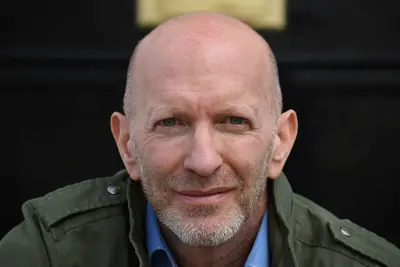
Simon Jonathan Sebag Montefiore is a British historian, television presenter and author of popular history books and novels.
