Andrew Solomon Quotes
As a little kid in the late 1960s, I was afraid of the world. Even if I didn't get caught in the draft that was sending American teenagers to Vietnam, there was always the possibility of a Soviet nuclear attack. I made constant escape plans and imagined a life going from port to port.
Solomon, Andrew. Far and Away: Reporting from the Brink of Change. Scribner, 2016.


Only three days later the Russians detonated their first atomic device.


1st Earl Mountbatten of Burma

This quotation is very important in helping to understand the 1950s in America with respect to nuclear weapons policy. McCormick was one the better educated, sophisticated, and influential Americans. Yet he appears to be a technological and nuclear ignoramous. Most people had not yet realized that atomic weapons were not just much larger traditional bombs. They could do terrible damage, but it would always be localized they thought. Chicago might be destroyed but the people out of range would be OK. He never got it that a dirty bomb could be dropped on Detroit and depending on which way the wind is blowing could wipe out Chicago and much of the Midwest as well. He knew nothing of the genetic effect the radiation, nor the implications for the environment of maintaining a large nuclear manufacturing industry. He and many like him did not realize that after the first bombs were created, how easy it would be for the Russians and others to also develop a nuclear arsenal. And 50,000 warheads was just a matter of effort. The implications of these things would inhibit our carrying out his and others ideological views of foreign policy. Oppenheimer and most nuclear scientists explained all this, but believing them and acting on those beliefs would have been too much of a change.


The fear of nuclear war was a major emotion for most people in the world at the time. Hard liners like Goldwater were concerned that that fear would undermine support for greater nuclear development and deployment in America and maintaining opposition to nuclear test ban treaties that were under discussion. He made the mistake however of referring to the fear as “craven”, morally denigrating any American who might be in fear of nuclear war, which included just about everyone. So the Democrats took this quotation and used it in their battery of TV ads showing Goldwater as not only a hard liner, but one who had no empathy or understanding for a normal person who feared a nuclear conflict—one who was not to be trusted with the Presidency. Had Goldwater simply argued that legitimate and reasonable fear of nuclear conflict might make the nation too timid and perhaps inadvertently increase the likelihood of nuclear disaster by not standing up to the Russians, he may not have had the resentment from most people who thought Goldwater was calling their fears “craven”.


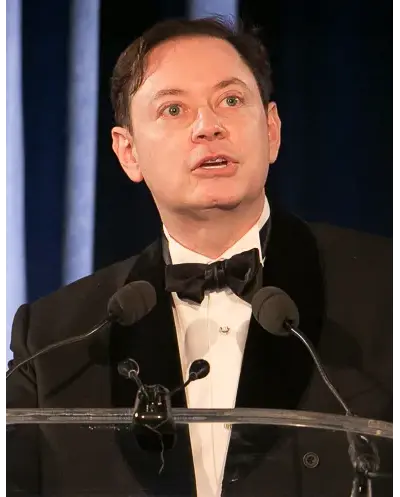
Andrew Solomon is a writer on politics, culture and psychology, who lives in New York City and London. He has written for The New York Times, The New Yorker, Artforum, Travel and Leisure, and other publications on a range of subjects, including depression, Soviet artists, the cultural rebirth of Afghanistan, Libyan politics, and deaf politics.
