Ruth Bader Ginsburg Quotes
Arizona presents no specific reason for excepting capital defendants from the constitutional protections extended to defendants generally, and none is readily apparent.
Ring v. Arizona. 536 U.S. 584. Supreme Court of the United States, 24 June 2002.


The call for individual liberty and the right of personal property by clergy is surprising to many. This Cahier was the consensus of the Clergy of Blois in 1789. There were cahiers of several provinces of France—some by the clergy, some by the nobles. What is fascinating is the emergence of many of the pre-Revolutionary French concepts. The example of the American revolution and its principles was known throughout the educated classes of France.
Responding to suggestions that drug traffickers be summarily executed:


This ruling upheld a military draft for males only. The logic was that men and women were dissimilar persons.
While in general this is a reasonable view. The Supreme Court is supposed to deal with the big issues of the law. However, in this case, the “fact” was very strong evidence that another person committed a murder and not the man who was convicted. He even confessed. How critics asked could it be constitutional to execute an innocent man. See {635414} for one of the sharpest dissents in court history.


Americans are divided as to whether this should be encouraged and helped or not.


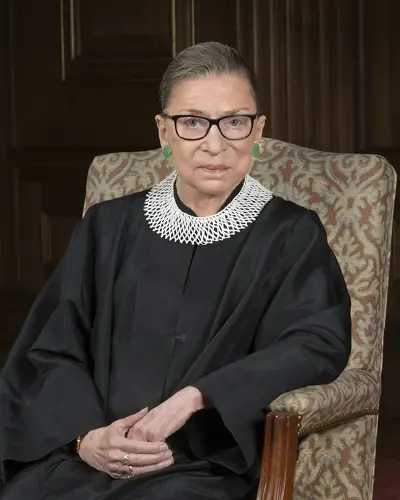
Joan Ruth Bader Ginsburg was an American lawyer and jurist who served as an associate justice of the Supreme Court of the United States from 1993 until her death in September 2020. She was nominated by President Bill Clinton, replacing retiring justice Byron White, and at the time was generally viewed as a moderate consensus-builder. She eventually became part of the liberal wing of the Court as the Court shifted to the right over time. Ginsburg was the first Jewish woman and the second woman to serve on the Court, after Sandra Day O'Connor. During her tenure, Ginsburg wrote notable majority opinions, including United States v. Virginia (1996), Olmstead v. L.C. (1999), Friends of the Earth, Inc. v. Laidlaw Environmental Services, Inc. (2000), and City of Sherrill v. Oneida Indian Nation of New York (2005).
