Edward Snowden Quotes
Are our competitors - for example, China, which is a deeply authoritarian nation - becoming more authoritarian or more liberal over time?
vanden Heuvel, Katrina, and Stephen F. Cohen. "Edward Snowden: A 'Nation' Interview." The Nation, 28 Oct. 2014.


His views are a mix of modernism and fundamentalism. He favors democracy and elections but also favored the Taliban destroying the great ancient Buddha statues when he was called an idol worshipper for urging the preservation of art.


China, in the last – less than half a century, has become one of the great democracies of the world.
At the time, the President wanted to get Chiang to fight aggressively against to Japanese when he was taking large amounts of American monetary aid and military equipment but using it to try and exterminate Mao and his Communists who were fighting the Japanese. FDR was clearly trying to flatter Chiang and his wife and gain political points with the China Lobby but it is not known whether or not he really believed this and other statements. Chiang was a vicious, cruel, corrupt military dictator but he had become a “Christian” and always spoke of the importance of democracy of which there was none in China. Our intelligence from China was very bad at the time, with the secret reports of General Stillwell (the senior American military man in China) and that of a few state department China hands were in total contradiction to the Public information that the President was receiving from Henry Luce and his Time Magazine and the large China Lobby, much of which was ironically paid for with the American AID money given to China. So it is not known whether Roosevelt actually believed this and other statements or was just being diplomatic.


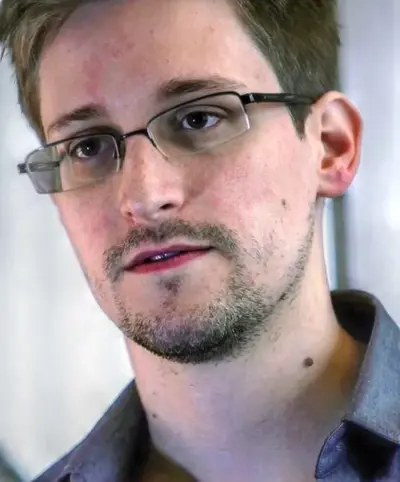
Edward Joseph Snowden is a former computer intelligence consultant who copied and leaked highly classified information from the National Security Agency (NSA) in 2013 when he was a Central Intelligence Agency (CIA) employee and subcontractor. His disclosures revealed numerous global surveillance programs, many run by the NSA and the Five Eyes Intelligence Alliance with the cooperation of telecommunication companies and European governments, and prompted a cultural discussion about national security and individual privacy.
