Murray Rothbard Quotes
Apart from medieval China, which invented both paper and printing centuries before the West, the world had never seen government paper money until the colonial government of Massachusetts emitted a fiat paper issue in 1690.
Rothbard, Murray N. A History of Money and Banking in the United States: The Colonial Era to World War II. Ludwig von Mises Institute, 2002, p. 51.


After the Revolutionary War, the army expected to be compensated and made provision for. But Massachusetts did very little for the Massachusetts line (the state troops were referred to as the “line”.) Shaw and many others looked to the new national government for a solution but a constitution had not even been discussed in convention in 1783 and would not for another 4 years. The Continental Congress could do almost nothing as they had few resources of their own and no power to require the states to do anything.


At the time, a bank note—paper money issued be a private bank—was not backed by any gold or silver and was not insured bym the government. A bank could print as much as they wanted, so it was always worth less as the further you were from the particular issuing bank, the less you could get your bank note, because no one knew whether or not the issuing bank would redeem the note or even be in existence. So every private bank note had diminished value for the public. However, carrying gold and silver around and making change for precious metals was difficult and often impractical. So people used banknotes. The same thing happens with credit cards today. The merchant has to pay a fee to the credit card company and the bank and therefore charges us more for whatever we buy. But most consumers and merchants are willing to pay the difference to obtain the convenience of the credit card,

The alternative would have been for the colonies to borrow English money at high interest rates and use that. Or use money from private banks (which occurred later.) Many conservatives are today a little shocked that some of the American Colonies just printed money with no backing but it worked—at least at the local level. A Boston Bank for example, would take a large commission for a Bostonian to convert Pennsylvania money into Massachusetts money. So it was not a very good system for trade between colonies and International trade. But English money was used for that. The colonists pragmatically got the “best of both worlds” and paid as little interest as they needed to. This system is essentially what we use today on a national scale with no gold or silver backing of the money.

This historical quotation enables us to date the importation of slaves into Massachusetts to as early as 1638. It also shows us that even though the Spanish had enslaved Negroes from Africa, when English ships raided Spanish ships and seized their booty, they considered the slaves as property and took them to then sell for the money. Had they had a different point of view, they might have freed the Back slaves who had been captured by their enemy, the Spanish. But they did not and money and money was the major motivation.


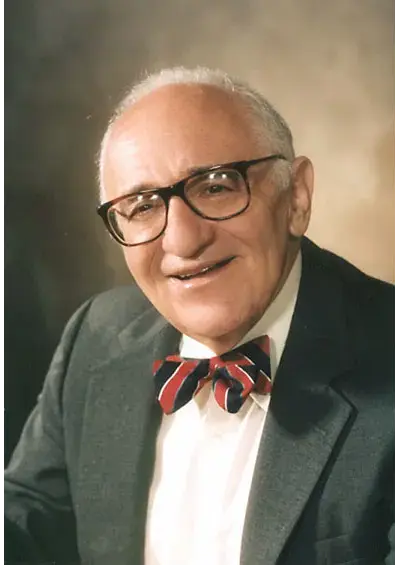
Murray Newton Rothbard was an American heterodox economist of the Austrian School, economic historian and political theorist. Rothbard was the founder and leading theoretician of anarcho-capitalism, a staunch advocate of historical revisionism and a central figure in the 20th-century American libertarian movement. He wrote over twenty books on political theory, revisionist history, economics, and other subjects.
