Maximilien Robespierre Quotes
Any institution which does not suppose the people good, and the magistrate corruptible is evil.
“Magistrate” historically has had a political meaning of the chief executive of a political entity. Mayors are still referred to as the “Chief Magistrate of the city.” The President is sometimes referred to as the “Chief Magistrate.” Lower magistrates can be political appointees who have power and responsibility for governing as well as judges of courts to whom the term “magistrate” refers in most modern references. The older use of the term harkens back to a time when there was no separation of powers and the assembly was the legislative, executive and judicial powers all at the same time.
Maximilien Robespierre, 1758-1794, French Jabcobin Revolutionist, Member, National Assembly & Committee of Public Safety, Declaration des Droits de l'homme, April 24, 1793
Sourced by: Eigen's Political and Historical Quotations


See Charles James Fox, John Milton, Jeremy Bentham, George Mason, Henry Clay, Benjamin Disraeli and Woodrow Wilson for similar expressions of this idea.


See Charles James Fox, John Milton, Jeremy Bentham, George Mason, Grover Cleveland, Benjamin Disraeli and Woodrow Wilson for similar expressions of this idea.

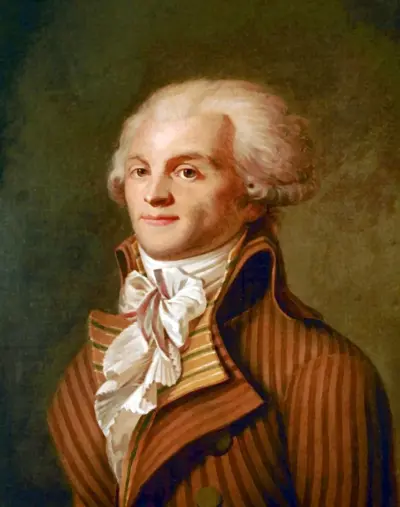
Maximilien François Marie Isidore de Robespierre was a French lawyer and statesman who was one of the best-known and most influential figures of the French Revolution. As a member of the Constituent Assembly and the Jacobin Club, he campaigned for universal manhood suffrage and the abolition both of celibacy for the clergy, and slavery. In 1791, Robespierre became an outspoken advocate for the citizens without a political voice, for their unrestricted admission to the National Guard, to public offices, and for the right to carry arms in self-defence. Robespierre played an important part in the agitation which brought about the fall of the French monarchy on 10 August 1792 and the summoning of a National Convention. His goal was to create a one and indivisible France, equality before the law, to abolish prerogatives and to defend the principles of direct democracy.
