Lucretius Quotes
And many kinds of creatures must have died,
Unable to plant out new sprouts of life.
For whatever you see that lives and breathes and thrives
Has been, from the very beginning, guarded, saved
By it's trickery for its swiftness or brute strength.
And many have been entrusted to our care,
Commended by their usefulness to us.
For instance, strength supports a savage lion;
Foxes rely on their cunning; deer their flight.
Lucretius. The Way of Things. Translated by Rolfe Humphries, Indiana University Press, 1968.


Laymen look at nature fondly and personify “Mother Nature” as kindly and beneficent. However, scientists have a more dispassionate view of nature and see it as a combination of forces that would kill most life-forms unless there is a combination of behavior and evolution to resist the normal forces of nature. While man has been responsible for the termination of a number of species, well over 99 percent of all the animal species that have ever lived are extinct today and that has been all “natural”. Schrodinger explains that nature is not a positive force, and in reality is the opposite—every species has to overcome nature and what is natural in order to survive.


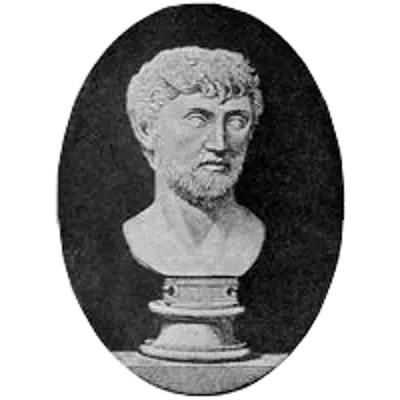
Titus Lucretius Carus (/ˈtaɪtəs luːˈkriːʃəs/ TY-təs loo-KREE-shəs, Latin: [ˈtɪtʊs lʊˈkreːtɪ.ʊs ˈkaːrʊs]; c. 99 – c. 55 BC) was a Roman poet and philosopher. His only known work is the philosophical poem De rerum natura, a didactic work about the tenets and philosophy of Epicureanism, and which usually is translated into English as On the Nature of Things. Lucretius has been credited with originating the concept of the three-age system that was formalised in 1836 by C. J. Thomsen.
