John Locke Quotes
And because it may be too great a temptation to human frailty, apt to grasp at power, for the same persons, who have the power of making laws, to have also in their hands the power to execute them, whereby they may exempt themselves from obedience to the laws they make, and suit the law, both in its making, and execution, to their own private advantage.
Locke, John. Two Treatises of Government. Awnsham Churchill, 1690, p. 317.


One of the conundrums of our constitutional system is who has the last word as to what the Constitution means. Essentially it is the judicial branch headed by the Supreme Court. But there are those who believe that the current popular majority should have a say in what is or is not constitutional. If so the legislative branch should have the last word. Still others say that the President is the only person elected by ALL the people, so his opinion most reflects the will of the public. And then there are most who argue that the Constitutional system was created just to avoid the power of currently popular majorities, and the courts should decide based on the Constitution itself. So the statement has very little meaning except that Phillips thinks that the courts have too much power. Whoever gets to decide what is or is not Constitutional will be accused of being “over” the Constitution by those who don’t like the decisions. In our system, that is the courts.


The Senate was investigating a scandal where the George W. Bush White House had induced the Attorney General, Alberto Gonzalez, to fire 8 of their own political U. S. Attorney appointments because they had or were investigating/prosecuting Republican politicians for corruption or not prosecuting Democrats vigorously enough. Gonzalez took the responsibility for the firings but did “not remember” why each had been fired nor was there any record in the Justice Department indicating any shortcoming with their jobs. The White House political operatives refused to testify under oath citing “Executive Privilege.”

Under public pressure resulting from Harkin and other legislators’ complaints, Ashcroft was forced to appoint a special prosecutor and withdraw from the case. The special prosecutor verified that the leak had come from the administration and prosecuted the Vice President’s Chief of Staff for lying before a grand jury and covering up the scandal.

The President had authorized the NSA to spy Americans who might have been suspected of being themselves or being in contact with terrorists without obtaining permission of a court including the Foreign Intelligence Surveillance Act (FISA) special court that had been established for these cases. Instead the administration argues that it was inherent in the powers of the Presidency in time of war.
The drafters of the Constitution were well aware of this view of Montesquieu’s which was one of the main bases of separation of powers and checks and balances in America.

For Turgot, see below

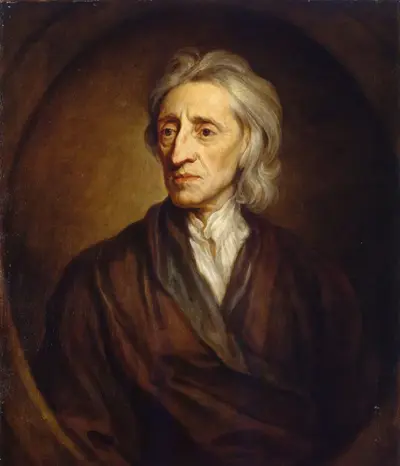
John Locke FRS was an English philosopher and physician, widely regarded as one of the most influential of Enlightenment thinkers and commonly known as the "Father of Liberalism". Considered one of the first of the British empiricists, following the tradition of Sir Francis Bacon, Locke is equally important to social contract theory. His work greatly affected the development of epistemology and political philosophy. His writings influenced Voltaire and Jean-Jacques Rousseau, and many Scottish Enlightenment thinkers, as well as the American Revolutionaries. His contributions to classical republicanism and liberal theory are reflected in the United States Declaration of Independence.
