Niccolo Machiavelli Quotes
An armed republic submits less easily to the rule of one of its citizens than a republic armed by foreign forces. Rome and Sparta were for many centuries well armed and free. The Swiss are well armed and enjoy great freedom. Among other evils caused by being disarmed, it renders you contemptible. It is not reasonable to suppose that one who is armed will obey willingly one who is unarmed; or that any unarmed man will remain safe among armed servants.
Machiavelli, Niccolò. The Prince. Translated by W. K. Marriott, J. M. Dent and Co., 1908, p. 98.


President James Madison expressed a similar sentiment in his first inaugural address.


Note the phrase “well regulated militia.” This is the exact same phrase which the Founding Fathers chose to use in the Second Amendment of the Bill of Rights over a decade later. And in this amendment the right to bear arms is provided for the “well regulated militia” and not for individuals as the Supreme Court has ruled many times. This quotation shows that the phrase was not just drafted by the founders, but had a clear and established meaning of which they were aware. Many people think that the phrase did not have a known meaning at the time but this quotation shows differently as the Constitutions of all the States were available to and studied by the Congress and most educated people.


Note that this was 4 years before the American Constitutional Convention and even longer before the American debate over the Bill of Rights and the 2nd Amendment. But, the importance of the right to bear arms was not an American invention. Van der Capellen was talking about it and writing about it before the Americans considered it. It is not known whether or not any of the Americans knew about van der Capellen and his view on citizen armament.


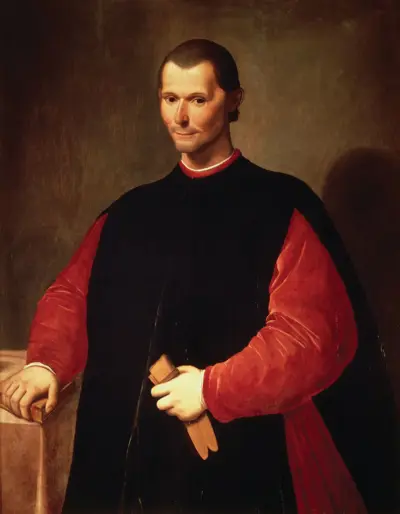
Niccolò di Bernardo dei Machiavelli was an Italian Renaissance diplomat, philosopher and writer, best known for The Prince (Il Principe), written in 1513. He has often been called the father of modern political philosophy and political science.
