Pedro de Cieza de Leon Quotes
Among the colonists were spies who took note of the conversations and the schemes of the natives and supplied the information to the governors, who sent it to Cuzco without delay, to be submitted to the Inca. In this way all was made secure.
The Incas had an amazing mail delivery system like the Pony Expess but with runners. They had the fastest mail delivery system in the entire world and it was then faster than many modern systems in the 21st century. So the Inca received the intelligence of what was being said within a day or two, a much better centralized intelligence system than most.
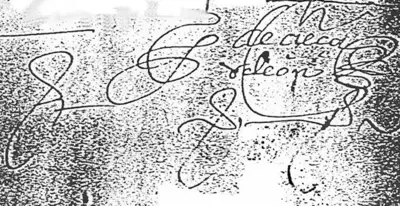
Pedro de Cieza de Leon, Spanish conquistador and chronicler of Peru, Description of the Inca use of Colonists as spies, Chronicles of Peru, 1550
Sourced by: Eigen's Political and Historical Quotations

This is a very interesting quotation because it shows that the South American Indians were not only the victims of Spanish colonialism, but before Europeans ever set foot in the New World, expansionism, conquest and colonialism was alive and well. It was just that one Indian people imposed it on others. Note also the techniques of sending colonists to the new colonies to “civilize” the conquered peoples. Although this was common in Western History (even Alexander the Great used it, it was independently created as a colonial technique in the New World. The most extensive use of this technique was used by the Russians as that expanded to the Soviet Union the consequences of which we see in ethnic strife in the Balkans and the Ukraine even into the 21st century. Often these colonists were used as spies as well, in Peru {641657} as in all the Western examples.


Responding to suggestions that with the demise of the Berlin Wall the spying business will come to a halt: John Moore Cornwell


In one of America's first intelligence scandals, some OSS intelligence operatives in post-war Berlin had amassed a small fortune in black market gold, currency and art treasures before they were caught by the military police:


He was the Chairman of the Senate Judiciary Committee. The NSA had hacked into the servers of these firms and others that were located out of the country. (They would need to have a warrant if inside the country.) The companies had never known it until Edward Snowden made this practice public. The result was, the public was learning that there was no privacy in any of their e-mail, social media activity, exchange of photos or videos or anything else. The companies feared that this would then harm their business, and that the techniques NSA used to hack there servers would then be discovered and used by others to steal identities, credit cards and do such other damage to customers. Even if the particular hacking methods were not leaked to the bad guys, they, knowing that the servers were vulnerable, would be encouraged to work to figure it out.

These appear in much of her correspondence to Dee. In acknowledgement of the second, Dee signed his letters and reports to the Queen with two zeros (representing his eyes) and the numeral 7 which at the time in numerology was the number of mystery. Many believe that the James Bond moniker of ‘007’ derives from England’s original great secret agent and superspy who the queen would allow almost anything.

This is one of the reasons that Europe had many security problems during that period. Some of the countries had very poor intelligence services. Even the ones that did have quality intelligence, tended to avoid sharing intelligence with their neighbors.

Actually the United States has a long history in interfering with foreign elections throughtout Latin American Countries, Europe, Asia,, and Africa. Russia also has been trying to tilt elections recently in Eastern Europe and befroe the COld War the International Communist Party was involved trying to swing elections since shortly after the Russin Revolution. Before that the Czars agents were involved in many foreign elections. But the United States and Russia historically are relative newcomers and rank amateurs in interering with foireign elections when compared with Germany and France and the Champion--Great Britain who controlled much of the world and very often promoting democratic values like elections throughtout the world and then workign to manipulate those elections. Japan and Chine did much less of this historically. Instead they just conquored other counties and placed their puppets in charge. What was new in teh 2016 Russian interference in the American Election was the fact that it was done by hacking computers. Putin had accused Hillary Clinton of Interfering with the Russian election when he last ran for President by funing Russian organziations that oppo


Harmon was one of the nation’s experts on Intelligence. She pointed out that the CIA spent a relatively small portion of its budget on spies, intelligence and analysis relative to the larger proportion that went to their paramilitary covert operations. Since its inception, the CIA professionals have always preferred the glamour, adventure, and machismo of covert operations as opposed to the relative drudgery of intelligence gathering and analysis. This many believe explains the many major intelligence blunders the CIA has made such as missing the fall of the Berlin Wall, the disintegration of the Soviet Union, the development of nuclear bombs in several countries and the totally mistaken analysis in the Bay of Pigs and The trigger for the Iraq War.

Precursor to CIA. Stephenson was the British leading intelligence and espionage expert who served as the Intelligence Advisor to Winston Churchill in WWII. He was very forthcoming in teaching Donavan and the new OSS much of what they learned about spy-craft and intelligence operations.

This was one of the many major weaknesses of our Intelligence Agencies.

- Born:
- Died: July 2, 1554
- Nationality: Spanish
- Profession:
Pedro Cieza de León was a Spanish conquistador and chronicler of Peru. He is known primarily for his history and description of Peru, Crónicas del Perú. He wrote this book in four parts, but only the first was published during his lifetime; the remaining sections were not published until the 19th and 20th centuries.
