Ferdinand Marcos Quotes
America must realize, there are conditions she must accept in Asia. The first is a diversity of Asian cultures, governments, economic and political systems; the second, that to run against the tide of Asian nationalism is worse than impractical - it is also highly dangerous.
Marcos, Ferdinand E. "Address to the Joint Session of the U.S. Congress." Washington D.C., 15 Sept. 1966.

American Presidents after Wilson have not, in general, shared this view. By the latter part of the 20th century judgmentalism was a major component of American foreign policy and reached its zenith with the administration of George W. Bush.

He was very sensitive to the criticism of China’s human rights record. The Chinese leadership was very proud to their accomplishments of lifting hundreds of millions of people out of poverty and eliminating hunger and starvation, and many foreigners from developed nations were seemingly inattentive to the remarkable economic success in their focus on human rights shortcomings.


Many of his colleagues were concerned that there were relative power changes in the world and argued that no change should be tolerated by England. However, change is always in process although often it is not noticed until it has advanced and changed the balance of power. The rise of China, India and Brazil in the beginning of the 21st century are an example.


The “Vegas Rules” emanate from the slogan and practice that “Whatever happens in Vegas, stays in Vegas.


Not only were the Democratic and Republican Parties at odds, but both political parties were split with the different factions very hostile to each other. The Populists and the Progressives were putting great pressure in the Democrats, and the Corporate Republicans strongly and often viscously opposed President Roosevelt. America was politically fractionated. Roosevelt called for a comity and unity which never took place.


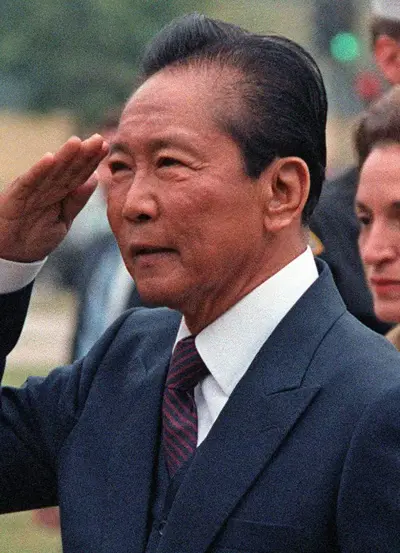
Ferdinand Emmanuel Edralin Marcos Sr. was a Filipino politician, lawyer and kleptocrat who served as the 10th President of the Philippines from 1965 to 1986. Espousing an ideology of "constitutional authoritarianism"(p414) under the New Society Movement, he ruled as a dictator under martial law from 1972 until 1981, and kept most of his martial law powers until he was deposed in 1986. One of the most controversial leaders of the 20th century, Marcos' rule was infamous for its corruption, extravagance, and brutality.
