Lutheran Church Quotes
Although both Church and State are ordinances of God, yet they must not be commingled …. Accordingly we condemn the policy of those who would have the power of the State employed "in the interest of the Church" and who thus turn the Church into a secular dominion; as also of those who, aiming to govern the State by the Word of God, seek to turn the State into a Church.
Lutheran Church, Missouri Synod, 1932
Sourced by: Eigen's Political and Historical Quotations


The State of New Jersey reimbursed parents of public and private school children when the children took public transportation to school. Parents of religious school children wanted the same reimbursement. The Court would not allow that. The vote was 5-4.


The Senate was presented with James Madison’s Language for the First Amendment. These three alternatives were proposed and rejected. The rejected versions turn out to have been very important. Some have argued that the First Amendment does not prohibit Congress making laws regarding religion as long as it doesn’t favor one religion over another—for example pay for clerics of all religions. However, that was the third proposal and it was rejected in favor of the high wall of separation proposed by Madison.


Pen name: Jack Nipps


Religious organizations may become grantees or contractors to perform various social services—along with other non-profit organizations provided, that they do not comingle the government contract money with the general church funds, that the services that are provided are provided to all regardless of religious beliefs, and that there is no religious ceremony or indoctrination in the provision of services. Catholic Charities and the Salvation Army are two of the larger religious organizations that receive government funds for general service provision. Those religions who do not want Federal Auditors reviewing their use of the money or who insist that prayer is a necessary aspect of the social services are the ones who have trouble and accuse the government of being hostile to religious social services.


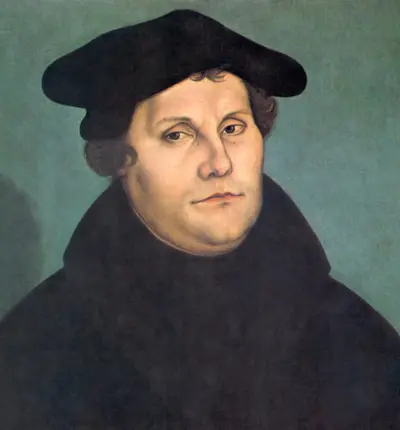
Lutheranism is one of the largest branches of Protestantism that identifies with the teachings of Martin Luther, a 16th-century German reformer whose efforts to reform the theology and practice of the church launched the Protestant Reformation. The reaction of the government and church authorities to the international spread of his writings, beginning with the 95 Theses, divided Western Christianity. During the Reformation, Lutheranism became the state religion of numerous states of Northern Europe, especially in northern Germany and the Nordic countries. Lutheran clergy became civil servants and the Lutheran churches became part of the state.
