Michael J. Fox Quotes
Almost instantly [after my announcement of Parkinson's], I saw the first couple of days the coverage was about, you know, "Fox's Parkinson's, blah, blah, blah." Then, two days after that, I saw the coverage turn. It started to become, "Can young people get Parkinson's?" All of a sudden, the conversation turned to become about that. And that was one of the first eye-opening things.
Fox, Michael J. Always Looking Up: The Adventures of an Incurable Optimist. Hyperion, 2009.


The TPP was the first Trade Agreement that had ever been classified as “Secret” when it was being negotiated. This was one of the most hotly debated policies of the era. Even Congress could not get a look at what was being negotiated although the Senate would have to ratify it when finished for it to become effective. .On the surface, it is outrageous that a non-military or defense activity should be secret in a democracy. What could be wrong with the Congress and the public being aware of a trade negotiation while it was being formulated and negotiated? Kirk and other apologists for the secrecy policy argue that because of the trade-off relationships among different clauses and facets of a trade treaty, there are many proposals that are made just to initiate a bargaining position, and the negotiators themselves neither expect nor intend those proposals to be a part of the final treaty. To then have groups of Americans get upset and start a lobbying position against a treaty when what they object to is not ever going to be in the treaty poisons in the public mind the entire treaty which then could be killed for something that was never real to begin with. A similar thing happened with the Obamacare legislation. Congress drafted the various clauses and many were included as part of the bargaining process or misunderstood because of poor first drafting. Opposition to those clauses set a tone of animosity against the bill as a whole. After the bill was passed, the clauses that were most unpopular or misinterpreted were the main reason that citizens gave for opposing Obamacare even though they were not in the legislation. Advocates of secrecy point out that the original Constitutional Convention was entirely secret with all the delegates agreeing that if each and every proposal that was debated were public, there would develop so much opposition that the result could never be ratified later. Yet it is hard to argue against transparency of government processes in a democracy.


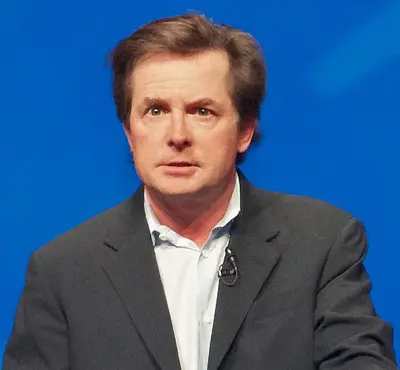
Michael Andrew Fox OC, known professionally as Michael J. Fox, is a Canadian-American retired actor, author, film producer, and activist. Beginning his career in the 1970s, he first rose to prominence for portraying Alex P. Keaton on the NBC sitcom Family Ties (1982–1989). Fox achieved further recognition as protagonist Marty McFly in the Back to the Future film trilogy (1985–1990). The trilogy's critical and commercial success led to Fox headlining several films throughout the 1980s and 1990s, including Teen Wolf (1985), The Secret of My Success (1987), Casualties of War (1989), and The Frighteners (1996). He returned to television on the ABC sitcom Spin City, where he portrayed the lead role of Mike Flaherty from 1996 to 2000.
