Ernest Hemingway Quotes
All you can be sure about in a political-minded writer is that if his work should last you will have to skip the politics when you read it. Many of the so-called politically enlisted writers change their politics frequently... Perhaps it can be respected as a form of the pursuit of happiness.
Ernest Hemingway, 1898-1961, Writer, Interview by George Plimpton, Paris Review, Issue 18, Spring 1958
Sourced by: Eigen's Political and Historical Quotations


This quotation illustrates a political phenomenon that used to be common in American politics—the spoils system where government activities, positions, contracts and grants were awarded to the supporters of the winning party and not to the opponents. In modern times government contracts were supposed to have been awarded on the basis of qualifications and price and not conditioned on political support. In this rare quotation, the secretary admitted to violating his own Department’s regulations and using politics as a criteria where existing laws prohibited that.

Theological & Legal Expert. A fatwa is a religious legal ruling
The Senator had switched parties.


Although, the Obama administration vastly improved on this requirement compared to the George W. Bush administration excesses, he was not able to eliminate it. Some would argue that it should NOT be eliminated in that military planning ought to be driven and controlled by the people in a democracy, and therefore the process is inherently political. However few would defend the Bush ideologically driven military planning and decision making.


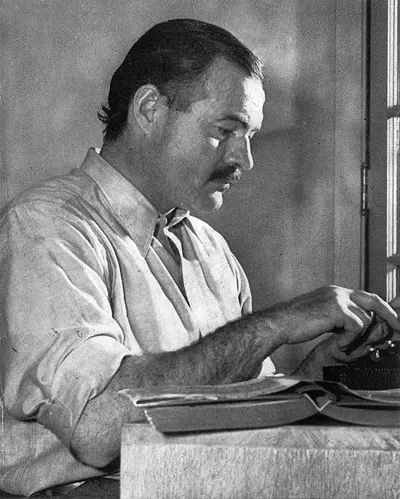
Ernest Miller Hemingway was an American novelist, short-story writer, journalist, and sportsman. His economical and understated style—which he termed the iceberg theory—had a strong influence on 20th-century fiction, while his adventurous lifestyle and his public image brought him admiration from later generations. Hemingway produced most of his work between the mid-1920s and the mid-1950s, and he was awarded the Nobel Prize in Literature in 1954. He published seven novels, six short-story collections, and two nonfiction works. Three of his novels, four short-story collections, and three nonfiction works were published posthumously. Many of his works are considered classics of American literature.
