Eleanor Roosevelt Quotes
...all wars eventually act as boomerangs and the victor suffers as much as the vanquished
Many Roosevelt haters claimed that the President was plotting to have America enter the European war even at this time. Mrs. Roosevelt was a strong anti-war voice at the time. As hard as it is for us to imagine today, while her husband was President of the United States, the First Lady wrote a nationally syndicated newspaper column every single day with politics frequently the subject. While she usually agreed with the President, there were occasions where they seemed to not see things exactly the same. She tended to be more liberal than he. However, there were those who believed that when she criticized politicians, it was with FDR’s knowledge and blessing and she sometimes did his “dirty work.” Eleanor Roosevelt was one of the most influential people in the country—certainly more-so than any First Lady before and since.
Eleanor Roosevelt, 1884-1962, First Lady (Franklin Delano Roosevelt), U. S. Delegate to the United Nations, Newspaper Column, My Day, February 7, 1939
Sourced by: Eigen's Political and Historical Quotations


Two days later Lee surrendered at Richmond, and the Civil War was over. On April 14, Lincoln was assassinated. He died the next day.


It was this code, and its implementation in Saipan, Okinawa, and other Japanese held islands taken by the allies that caused Japanese soldiers to fight to the death or commit suicide. The prospect of this code being followed by Japanese soldiers, civilians or both in an invasion of the Japanese mainland, was one of the major arguments in favor of dropping the Atomic Bomb in World War II.


In world history man’s actions result in something quite different from what he purposes or intends.
This is an early statement of what is referred to as “the law of unintended consequences.”


It was then customary to return with the head of a killed Samurai which would be made up as if in life so the dead man could be recognized. That way, the victor received more recognition with the importance of the Samurai who he defeated.

Webb and others believe that President George W. Bush invaded Iraq, and unseated Saddam Hussein with no intention of leaving—that the plan was to establish a permanent American presence in the Middle East.

He was the first of the modern Western poets and is often referred to as the Father of the Humanities


America had more than one ancient exemplar of the problem of the Iraq War. The great Carthaginian General Hannibal was brilliant in war but tended to lose the benefits of victory by lack of planning and poor administration and geopolitical strategy. He could never “win the peace.” See {589454} for his view of the two phases of conflict.

Kennen, one of the great American wise men for foreign affairs, could not have predicted the outcome of the Iraq war any better.

There was a significant opposition in England who opposed the war against the rebellious colonies. Fox was one of the most outspoken who thought that England would not win.
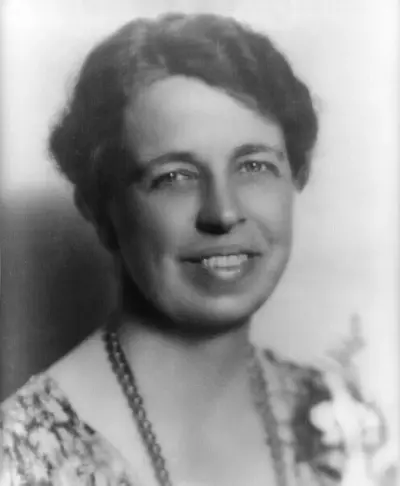
Anna Eleanor Roosevelt was an American political figure, diplomat and activist. She served as the First Lady of the United States from March 4, 1933, to April 12, 1945, during her husband President Franklin D. Roosevelt's four terms in office, making her the longest-serving First Lady of the United States. Roosevelt served as United States Delegate to the United Nations General Assembly from 1945 to 1952. President Harry S. Truman later called her the "First Lady of the World" in tribute to her human rights achievements.
