Jean-Baptiste Say Quotes
All travelers agree that Protestant are both richer and more populous than Catholic countries; and the reason is, because the habits of the former are more conducive to production.
This quotation was written long before the “Protestant work ethic” was coined and well defined. Even though Say was a Frenchman from a Catholic country, he and most other serious economists and politicians recognized this vast difference.
Jean-Baptiste Say, 1767-1832, French economist and journalist, A Treatise On Political Economy: or the Production, Distribution, and Consumption of Wealth
Sourced by: Eigen's Political and Historical Quotations

His answer was what Max Weber called “The Protestant Work Ethic.”


This was almost 2 thousand years before there were Protestants who could develop a Protestant work ethic.

This view that the more people a country has, the richer it is, has gone hand in hand with the notion that a large population will assure a nation of extensive military prowess. However, both of these are now known to be false. The most heavily populated nations are among the poorest, and military prowess is more a function of the training of troops and the modern tools and weapons. Tiny Israel has demonstrated that many times since its origin. It has been attacked over and over by several nations at a time. Despite the fact that Israel was vastly outnumbered by enemy troops and weapons like tanks and planes, Israel has repeatedly demolished the more populous enemies. The world, observing this, no longer emphasizes trying to build a large manpower pool as it does not help militarily and it makes full employment very difficult.

On the United States’ prosperity:


At the time of this quotation, the nation had gone through more than 3 decades of enormous increase in prosperity for the wealthy, and modest gains for the highly skilled, technically trained workers. However, correcting for inflation, average salaries did not increase at all. The middle class was particularly hard hit. Only 20 percent of the population benefitted from the growth at all; however, the 1 percent had rarely prospered more. Kenworthy’s principle did not apply for this period of American history.
Historically, there are two situations where major changes are made in societies: 1) After great crises—wars, depressions, plagues etc. 2) At times of great prosperity when people are feeling very generous and magnanimous.


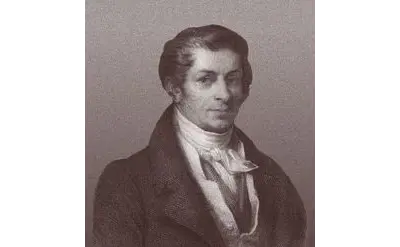
Jean-Baptiste Say was a liberal French economist and businessman who argued in favor of competition, free trade and lifting restraints on business. He is best known for Say's law—also known as the law of markets—which he popularized. Scholars disagree on the surprisingly subtle question of whether it was Say who first stated what is now called Say's law. Moreover, he was one of the first economists to study entrepreneurship and conceptualized entrepreneurs as organizers and leaders of the economy.
