Earl Warren Quotes
All political ideas cannot and should not be channeled into the programs of our two major parties. History has amply proved the virtue of political activity by minority, dissident groups, who innumerable times have been the vanguard of democratic thought and whose programs were ultimately accepted.
Earl Warren, 1891-1974, Chief Justice, U.S. Supreme Court, Governor of California (Republican), Republican Vice Presidential Candidate (with Dewey), Sweezey vs New Hampshire, 1957
Sourced by: Eigen's Political and Historical Quotations


Smith had written to most of the then likely Presidential candidates of both major parties asking for their position on the Mormons who were facing persecution wherever they went. None of the politicians would make any satisfactory commitments. Smith took Direct Action and became the only major religious official to have run for the Presidency of the United States until Pat Robertson tried and failed in 2000. Smith’s assassination shortly thereafter cut his run for the Presidency short before it made much headway and politically he had no chance to affect the race.

She was also the head of the Hong Kong civil service.


He was referring to the then Republican party. When the original Republican Party was founded, it was the much more liberal of the American political parties. After Lincoln and Emancipation, the vast majority of Blacks supported the Republicans. Most feminists of the time were also abolitionists and also supported the party, as did the Hispanics. Most of the young people were Republican. The Democrats were an “old white guy” party/ Over the years the Republican Party grew more conservative, and after Democratic President Lyndon Johnson passed the Civil Rights and Voting Rights Act, almost all the racists in the country shifted from the Democratic party to the Republican and this alienated Blacks still further. The Republican Party opposed the Equal Rights Amendment and Affirmative Action, and then despite the efforts of President George W. Bush and Senator John McCain killed immigration reform which alienated most Hispanics. Women and youth shifted awar from the Republican party. Jeb Bush, who married a Hispanic and spoke Spanish fluently, also attracted women and many youth, but he was a Republican exception.

This seeming abnormality was the result of most of the House of Representatives Congressional Districts being heavily weighted to one party or the other, some the result of demographics and most the result of intentional gerrymandering by the politicians in the State Legislatures. The Republicans at that time were much better at this than the Democrats and very few of the districts were competitive between the parties. Many Democratic urban districts had small democratic areas of the suburbs added to them giving them a larger majority than they needed to win while taking them out of the suburban districts making them easier to win for the Republicans. The original Constitutional concept that the House represented the people proportionately was then undermined as the Republicans could easily win the vast majority of the congressional seats and at the some tome garner millions of votes less nationally than the Democrats,


The "we" referred to the Tunisian Ennahda Party of which he was the founder.

Not the phrase “ideological rule”. He is not referring to an ideological ruler of a nation or other political entity. He is referring to the rule that our own ideologies often exercise over our minds. These he observes produce cruelties and receipts. One of the virtues he sees in political activity with a moral bend is that it protects us somewhat from our own ideologies. Among his critics, one weakness they point out that almost all morality itself is ideologically based.


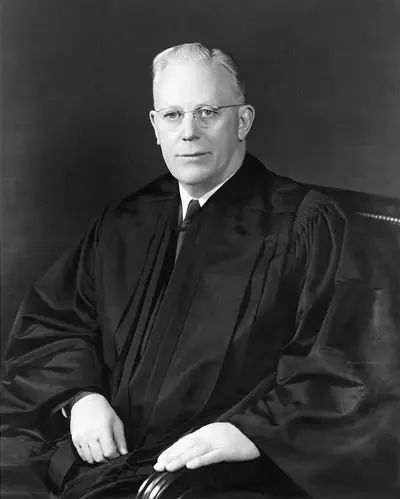
Earl Warren was an American politician and jurist who served as 30th governor of California from 1943 to 1953 and Chief Justice of the United States from 1953 to 1969. The "Warren Court" presided over a major shift in American constitutional jurisprudence, which has been recognized by many as a "Constitutional Revolution" in the liberal direction, with Warren writing the majority opinions in landmark cases such as Brown v. Board of Education (1954), Reynolds v. Sims (1964), Miranda v. Arizona (1966) and Loving v. Virginia (1967). Warren also led the Warren Commission, a presidential commission that investigated the 1963 assassination of President John F. Kennedy. He is the last chief justice to have served in an elected office before entering the Supreme Court, and is generally considered to be one of the most influential Supreme Court justices and political leaders in the history of the United States.
