John Stuart Mill Quotes
All free communities have both been more exempt from social injustice and crime, and have attained more brilliant prosperity, than any others, or than they themselves after they have lost their freedom.


The issue of slavery which had been suppressed in Congress for the first decades of the nation broke out when Missouri statehood was considered. By previous agreement, slavery was not even discussed in Congress but the time period elapsed. Tallmadge not only proposed that no more slaves could come into Missouri {613176} but most shocking to the Southerners was that every person born in the new state would be free at the age of 25. In a generation, there would be no more slavery in Missouri and there would be no economic compensation for slave owners at all. The House of Representatives accepted the amendment, but it failed in the Senate. At that time, Senators were not elected by voters but were appointed by the state legislators and the Southern slave states had a disproportionate share of the senate from a population point of view. But what this quotation shows clearly that a majority of the country in 1819 were opposed to slavery and were willing to end it without compensation.


President Bush, who in 6 years had only pardoned or commuted the sentence of 2 people before, commuted the criminal jail sentence of Scooter Libby, the White House Vice Presidential Chief of Staff who had lied to the FBI and the Grand Jury in order to protect the role of White House officials in the illegally leaking the identity of a CIA covert operator to punish her husband—a critic of the administration.


Neither Johnson nor his staff coined the Great Society expression. See {589294}.


Before the civil rights act was passed, most labor unions will racist and discriminated against black workers. The United Auto Workers union was an exception and Reuther was a strong advocate of desegregation and equal rights.
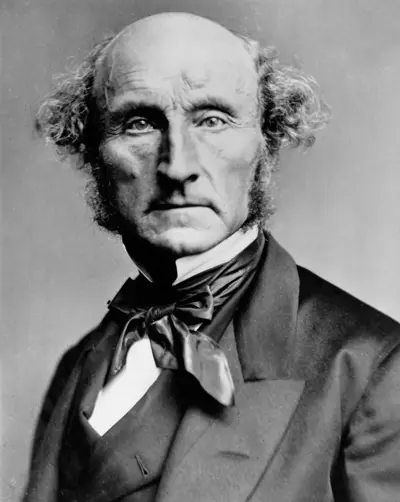
John Stuart Mill, usually cited as J. S. Mill, was an English philosopher, political economist, Member of Parliament, and civil servant. One of the most influential thinkers in the history of classical liberalism, he contributed widely to social theory, political theory, and political economy. Dubbed "the most influential English-speaking philosopher of the nineteenth century", he conceived of liberty as justifying the freedom of the individual in opposition to unlimited state and social control.
